

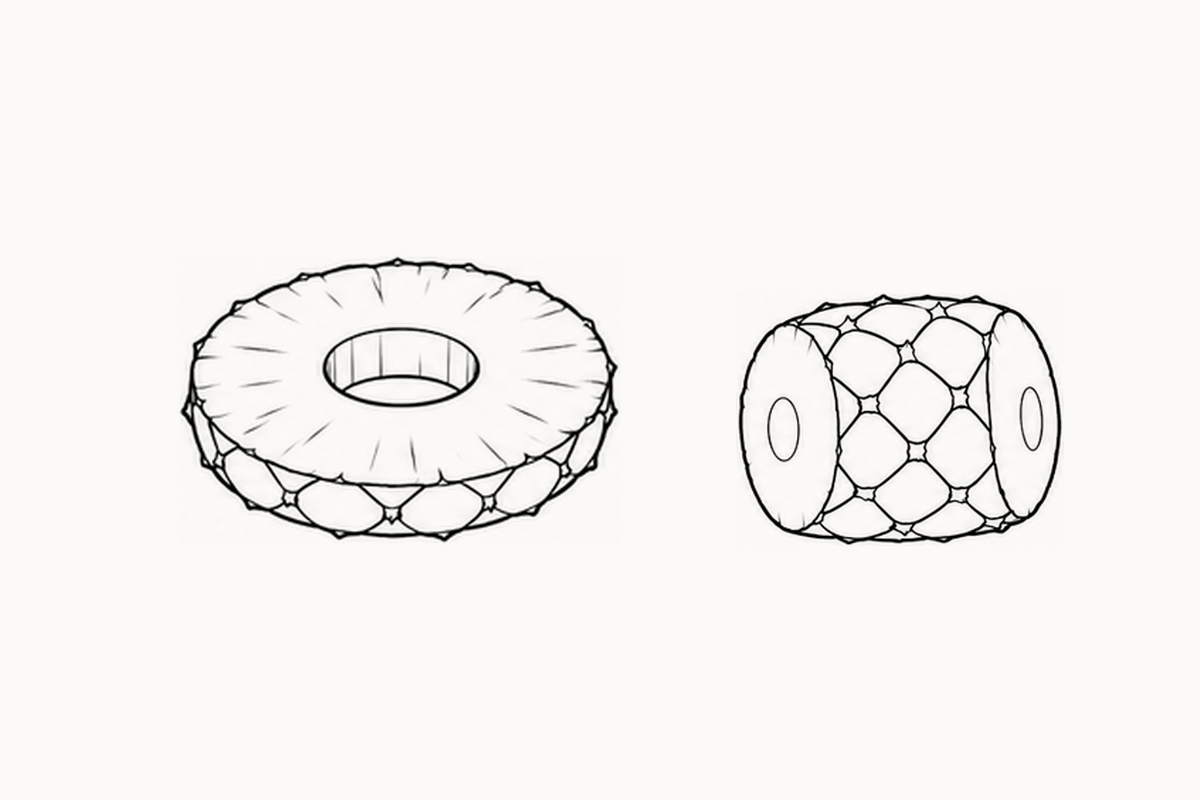
These elementary pineapple coloring pages offer five A4 sheets of cut rings, lengthwise pieces and short sections, with blank bands for drawing. Put out one sheet, a pencil and a few crayons. Compare the flat ring at the top left of page 1 with a short section in the lower row and ask, “Which center is an opening?” Your child can point, color one broad area or draw a larger ring below. Begin with the center and outside shape before adding the rind pattern.
Download the five-page Elementary Pineapple PDF (1.80 MB)
An open ring and a retained core are different
Each sheet contains eight reference positions in two rows and two empty practice bands. The five layouts use thirteen selected source cells with repeated placements; forty positions are not forty unique drawings. Some neighboring positions repeat a short solid-core section, rather than adding another kind of cut. The cored rings show an open center with an inner wall. Uncored sections retain a solid core indicated by a plain outlined circle, while a lengthwise half keeps a long solid core strip. Those three centers should not all be drawn as holes.
Choose the center before the details
Look at the flat ring at the top left of page 1. Follow the broad outside of its cut face, then the smaller opening inside it. Notice the short wall visible within that opening. Now find the plain small core circles on a short section in the lower row. Let your child choose which type to explore. You can say, “This ring has had its middle removed; this section still has its core.” They may point to the difference and color one piece without drawing both types.
Look through the complete sheets
Page 1 compares a flat cored ring with an upright one, then a crowned lengthwise half and a quarter. The half's long center is a solid strip. Below are neighboring pieces and repeated short sections with retained cores. Choose one clear ring for a first drawing.
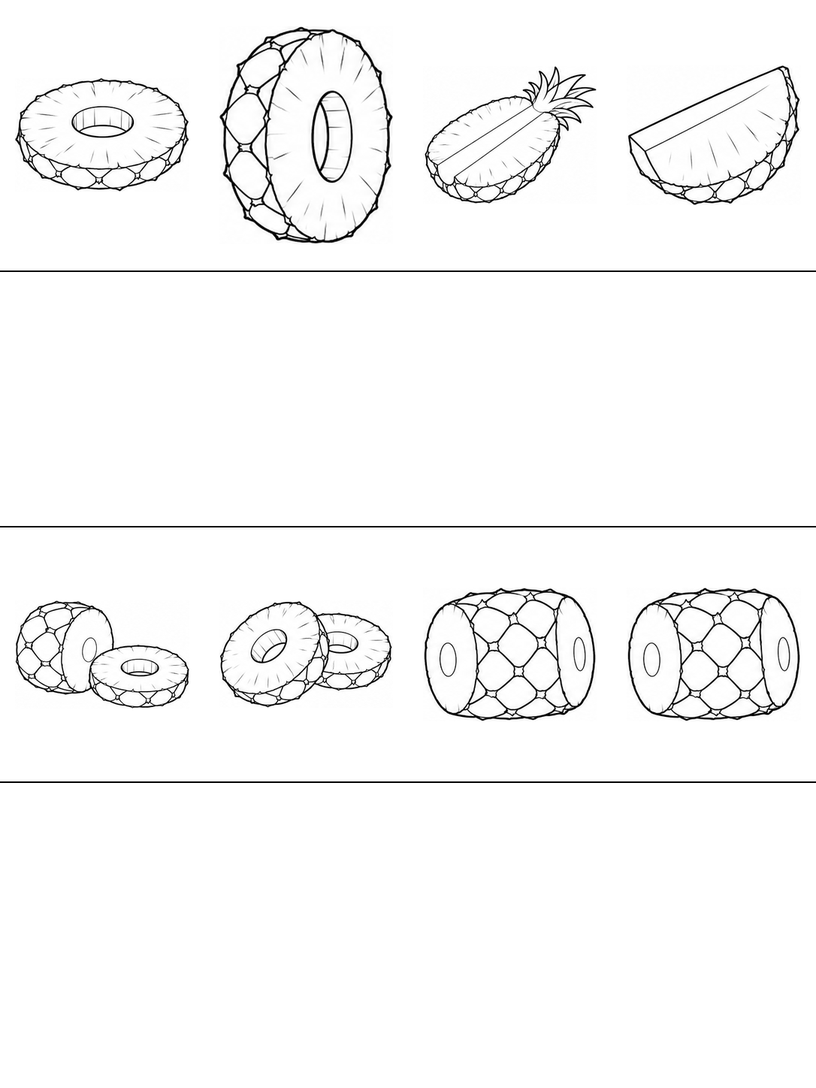
Page 2 changes some views while keeping the same kinds of centers. The upright ring shows its opening from another direction. A child can follow that inner edge with a finger and leave the outer rind shapes uncolored if the many boundaries feel busy.
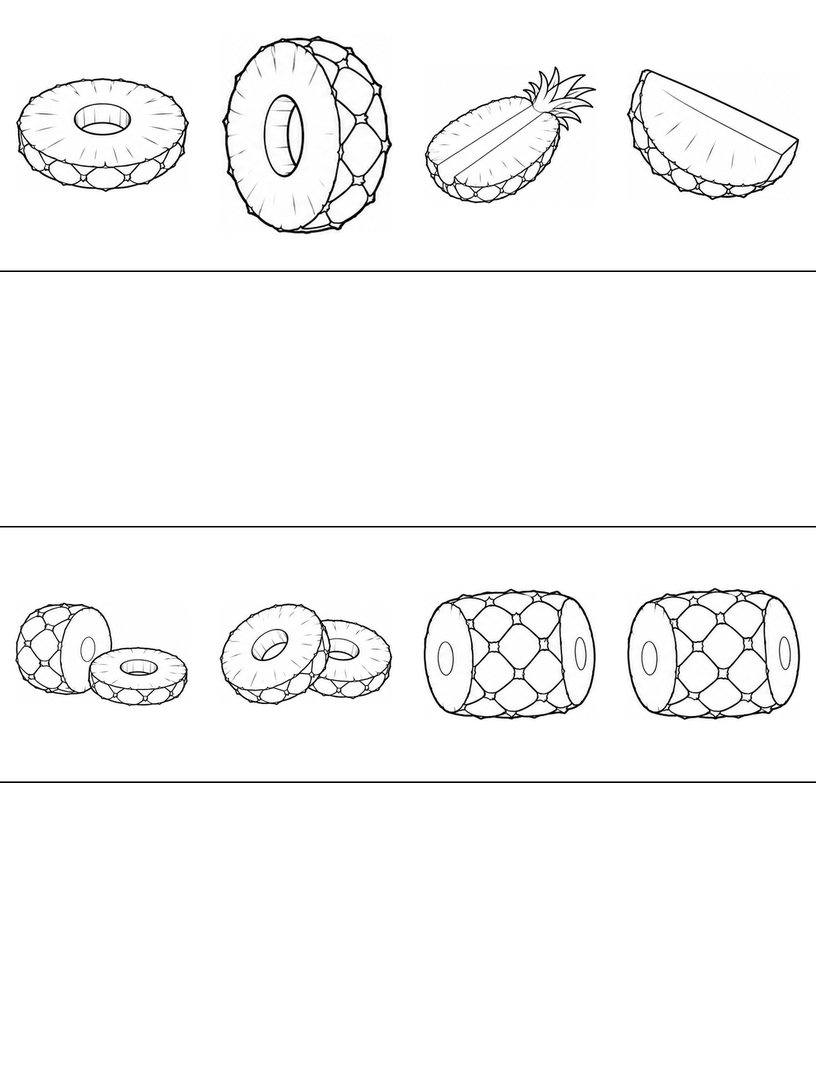
Page 3 recombines ring openings, long cut faces and solid-core sections. Follow the core strip along the crowned half before looking back at a ring. The long strip belongs to the cut fruit; it is not an open tunnel running through that half.
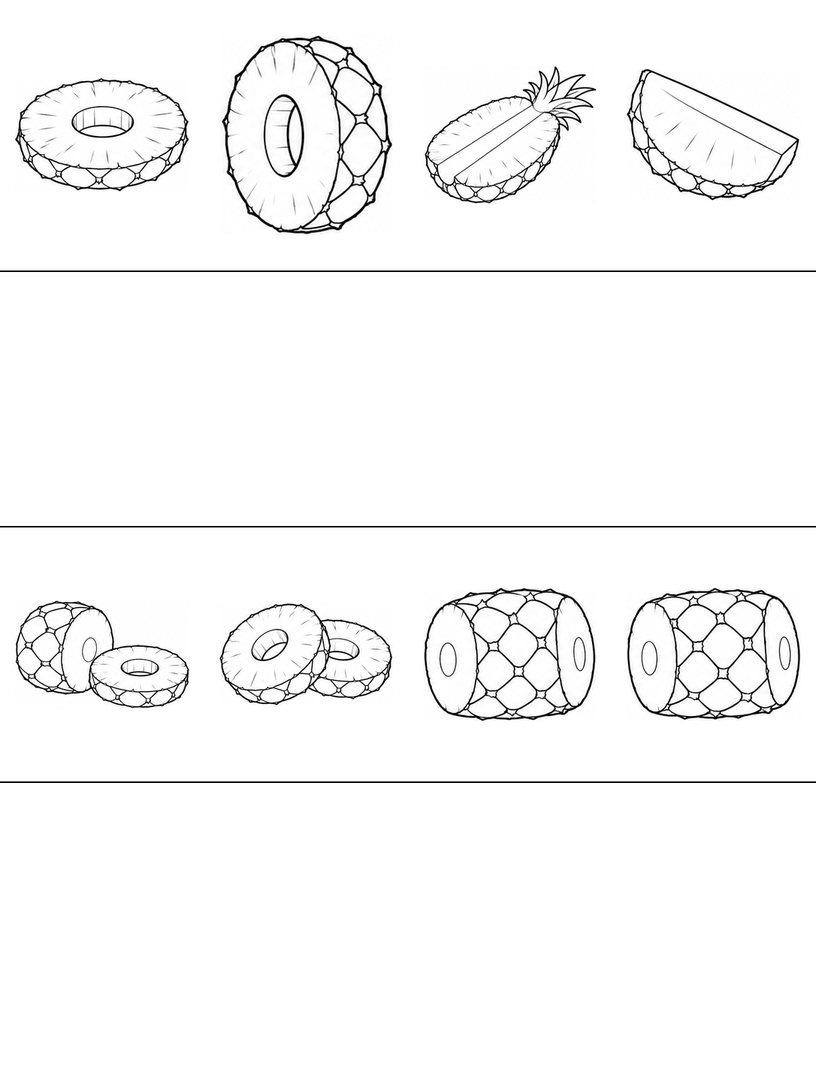
Page 4 offers the flat and upright rings again, along with adjacent cut portions. The two similar short-section positions near the end of the lower row can be used for another color or attempt. They are repeated reference material, not two new cut types.
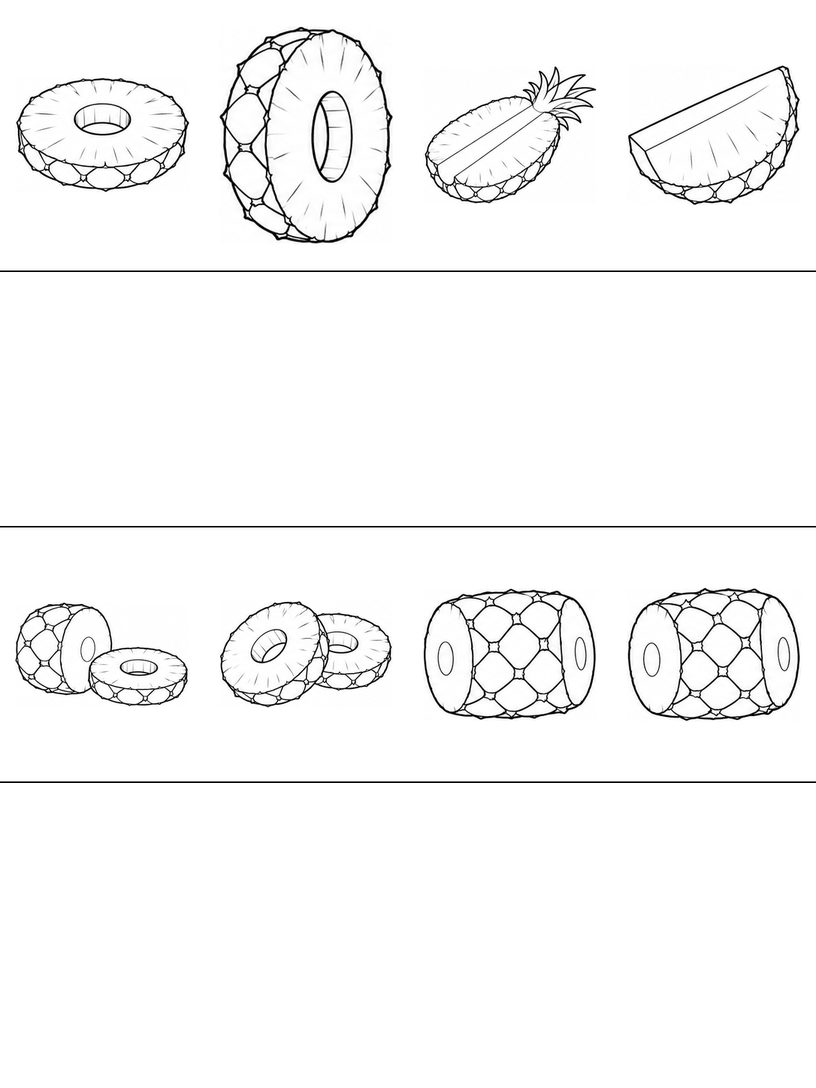
Page 5 returns to familiar rings and lengthwise cuts. Choose a known center type and draw its large boundary first. There is no need to copy every short line in the flesh or every outer rind shape to make one useful comparison.
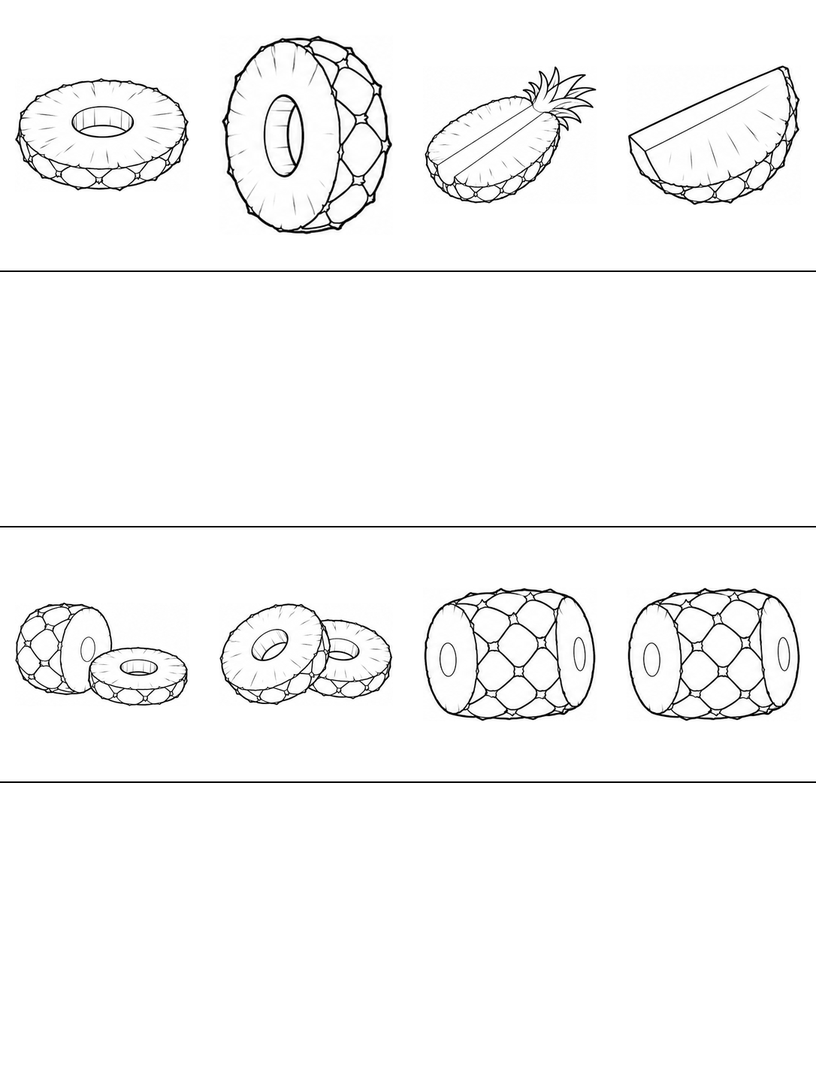
Draw an open pineapple ring with connected walls
Use the flat ring at the upper left of page 1. Offer a blank band or spare paper and make it larger than the reference if that helps keep the inner opening separate from the outside. This drawing is the cored version, so leave its center open.
- Place the face and its opening. Sketch a broad, gently flattened oval for the cut face. Place a smaller oval inside it for the removed center. Let both ovals follow the same tilt, with open flesh space between them rather than a circle touching the outside edge.
- Connect the outer and inner walls. Add a lower curve beneath the near outside edge and join it back to the face at the sides. Within the central opening, add the short visible inner-wall curve and its side connections shown in the reference. Leave the middle empty rather than drawing a solid face across it.
- Keep the rind detail broad. Choose a few large rind shapes along the outer wall and let them bend with its curve. Keep the broad flesh mostly open. Return to the hole and check that its visible wall belongs to the same thick ring before choosing an area to color.
If the ring looks like a flat oval with a small symbol on it, compare the visible inner wall and add just that short connection. If the opening fills with too many lines, try a larger drawing and keep its center clear. If the outer wall floats below the face, bring its side curves back to the cut edge. Your child can also stop after the two face outlines and point to the wall on the printed reference.
A made-up sorting prompt
For an optional made-up story, imagine that a drawing display needs to sort open rings from pieces that still have a core. Ask your child to point to one of each on the sheet, then draw only their chosen type in a blank band. They can name it “open ring” or “core still here” while showing the center. The sorting display is your activity prompt, not a game board or labels printed in the PDF.
Choose one smaller observation
A child who prefers coloring can choose one rind shape on a ring and leave the rest white. A child interested in leaves can look at where the crown remains attached to a lengthwise half. For an intact fruit with fewer surface lines later, the Beginner apple sheets offer whole outlines and short stems. The Beginner bird sheets offer a different subject. These are choices for another turn, not more tasks to finish now.
Printing and file notes
The download contains only the five Elementary pineapple sheets. Choose A4 paper and 100% / Actual size, check the preview for clipped borders and try one page before printing more. Use Fit if your printer needs extra margin. The printing guide explains these choices. The files have been checked digitally, but no physical print test has been performed.
Worksheet questions
Does every outlined center mean a hole?
No. Cored rings show an opening, including its visible inner wall. The short uncored sections retain a solid core marked by a simple circle, and lengthwise halves keep a solid strip. Choose the actual reference before deciding which center to draw.
Why are some short sections repeated?
The set reuses selected source material, including repeated neighboring section positions. Each page still provides eight positions and two blank bands, but those positions are not eight different cut types or forty unique designs across the full set.
Do I need to draw every rind mark?
No. Keep the broad face, opening or retained core clear first. Your child can add a few large rind shapes, color one printed area or leave the pattern out of their own drawing. Extra pattern lines cannot replace a missing center or wall connection.
Use and sharing
You may print these pages for personal, family or classroom activities. Keep the website credit on the sheets. Share this article link with other adults instead of redistributing or selling the PDF. Read the terms of use for the permission and its limits.
Creation and editorial note
The activity guide and page layout were prepared and edited for Coloring Pages Story, with AI assistance. The line art is AI-assisted. The page previews and five-page PDF have been checked digitally. No classroom trial or physical print test has been performed.
Comments
Comments are closed