

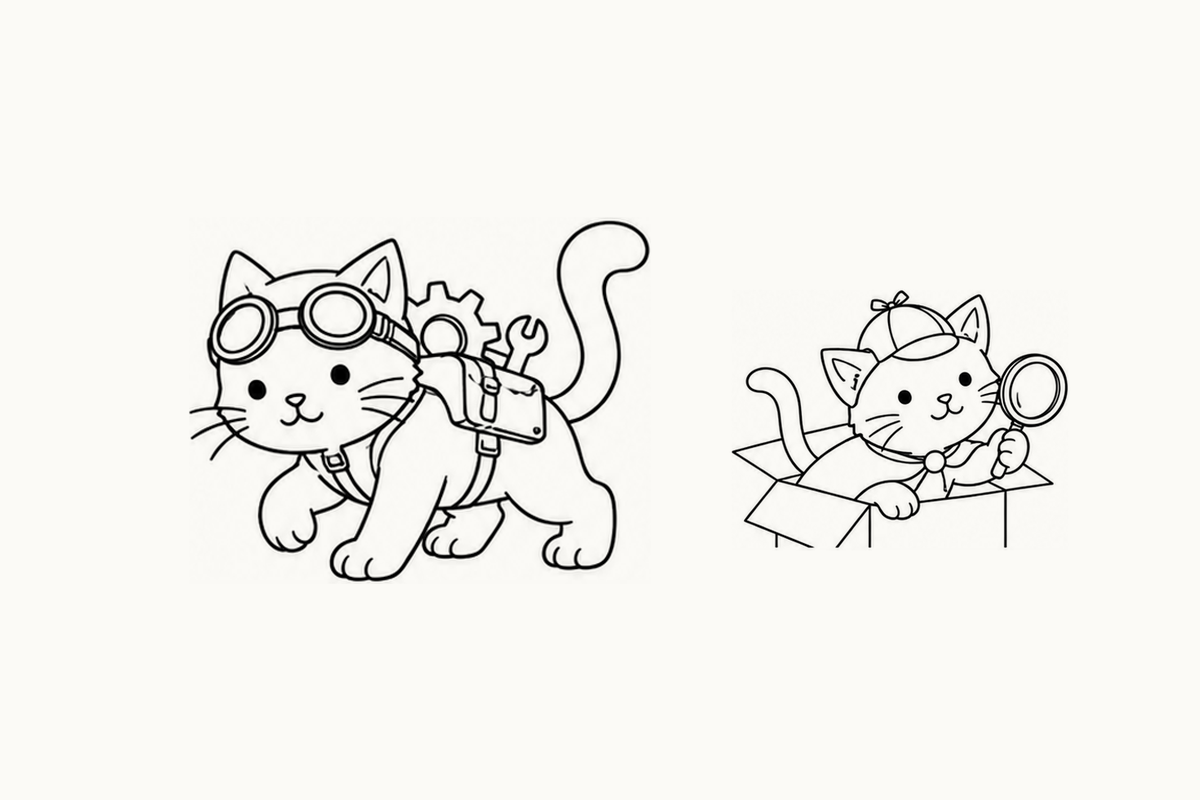
A cat peers over a box edge. Another turns back while keeping a paw on a support. Those small overlaps can tell you more about a pose than the costume details. These intermediate cat coloring pages provide five A4 sheets for coloring and drawing fictional characters in space. Choose one contact or hidden edge to explore with your child. You can leave most of the accessories out of your own drawing.
Download the five-page Intermediate Cartoon Cat PDF (2.32 MB)
What is in this set?
Each page has four references, two in the first band and two in the third, with two blank drawing bands. Scenes include a box, branches, rocks, equipment and imagined adventures. The characters use human-like tools and gestures, so these illustrations are not observations of real cat behavior. Intermediate refers to the task of reading support, body turns and overlap, with accessories kept optional.
Before you begin
Look at the box scene at the upper right of page 1. Ask your child where the box hides the cat's body and where a paw comes in front of an edge. They can point to those places before choosing a color. A plain box-and-head rehearsal on spare paper can be clearer than trying to copy the whole equipped character at once.
Look through the five sheets
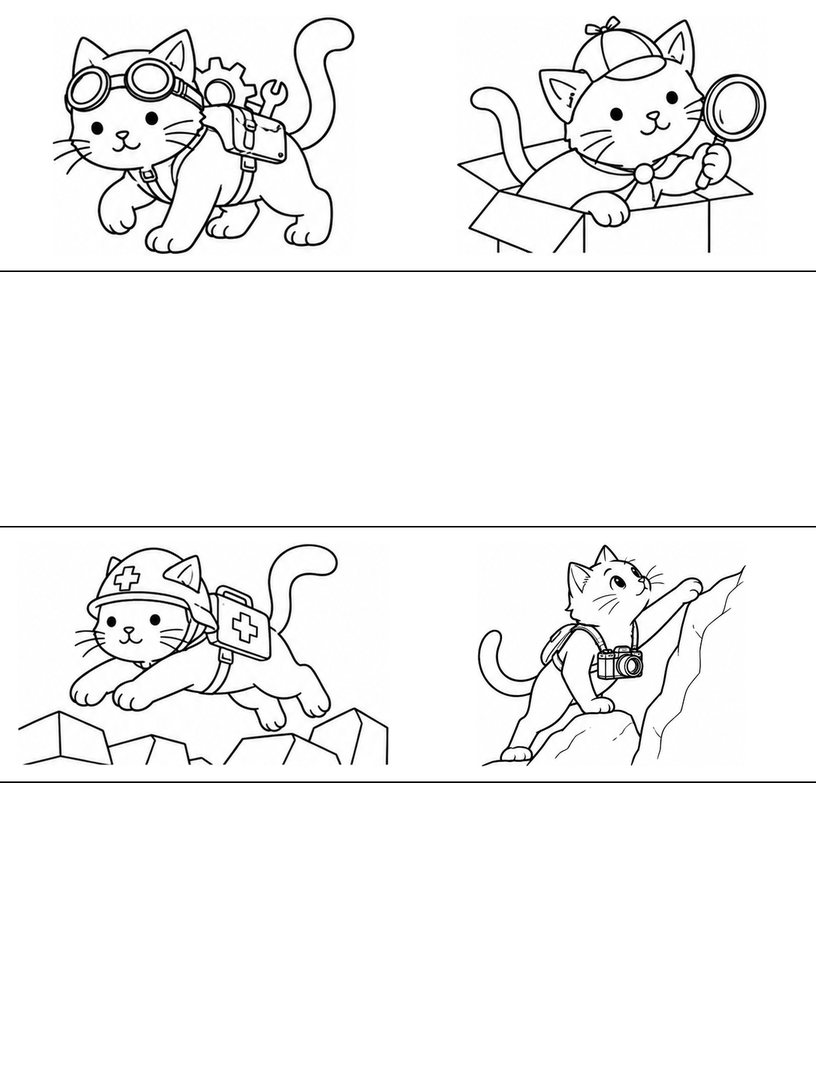
Page 1 includes a goggled cat, a character peering from a box, a helmeted jumper and a camera-carrying climber. The box gives a simple overlap to start with. Color its front flap one color and the cat another, keeping their shared edge clear.
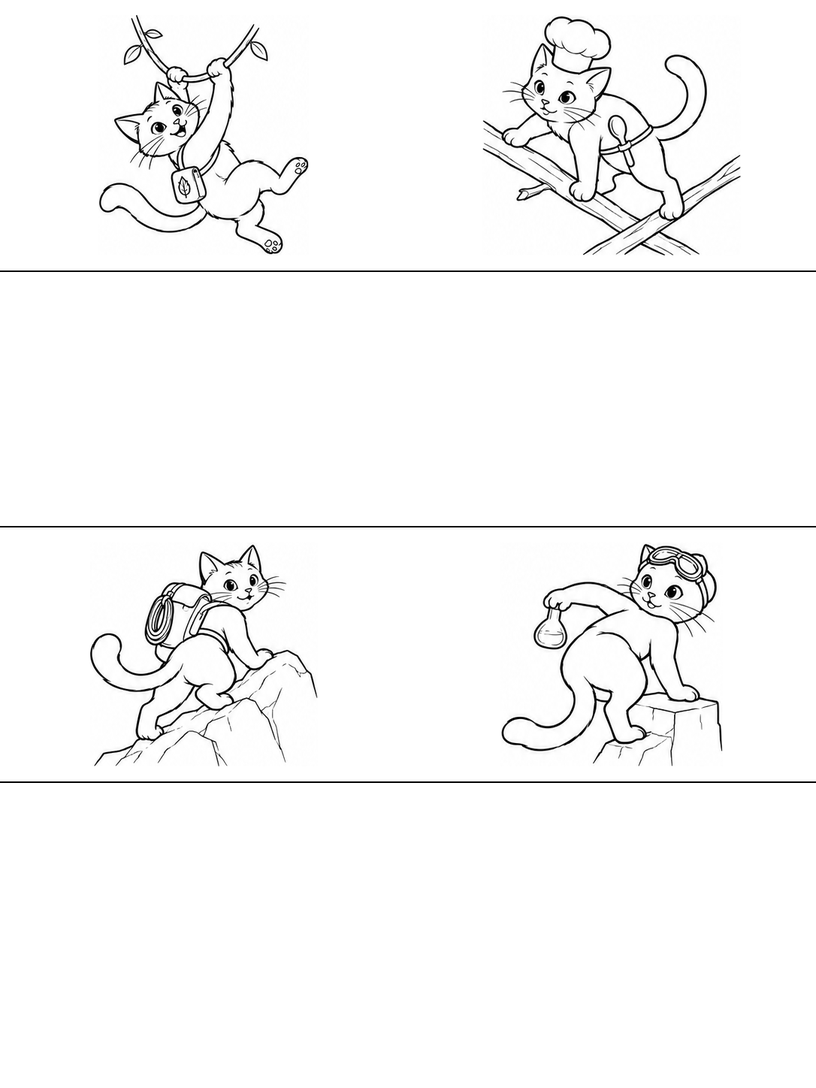
Page 2 shows a hanging pose, a branch walker, a turned climber and a goggled character reaching behind its body. Compare where a supporting paw touches a surface. In the blank band, mark that surface first, then add a body direction line above it.
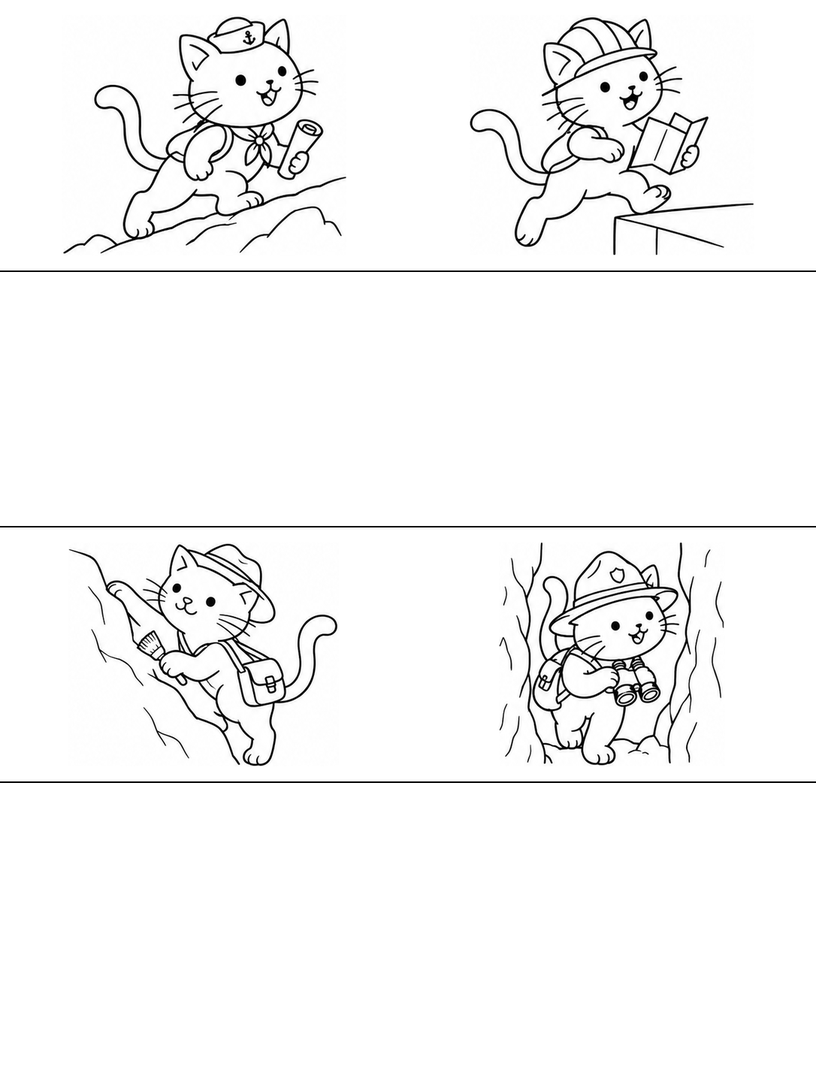
Page 3 includes a sloping path, platform step, rock-side brush holder and character between trunks. The costume details vary, but the useful question stays specific: what is in front? Choose one visible paw or face edge to keep uninterrupted while a back line stops behind it.
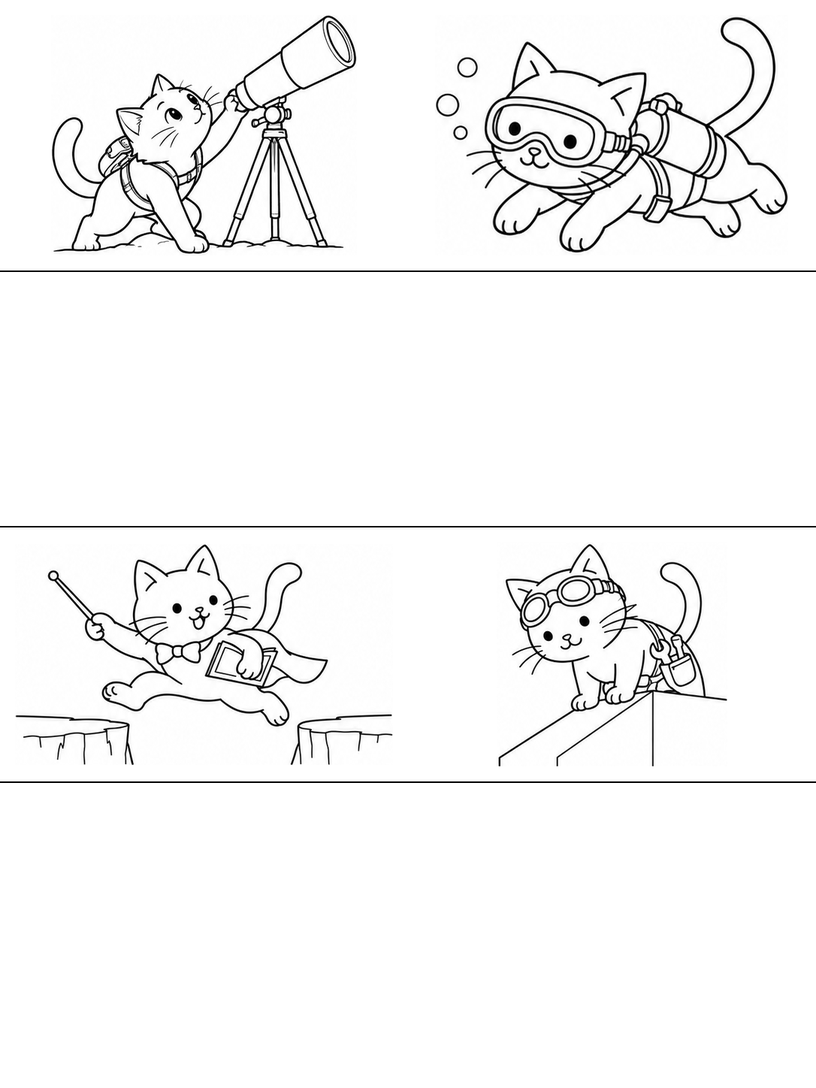
Page 4 includes a telescope scene, a fantasy diver, a gap-crossing character and a cat looking down from a platform. Choose one pose and ignore its equipment for a first sketch. Find the head, chest and main body direction before adding a tail or prop.
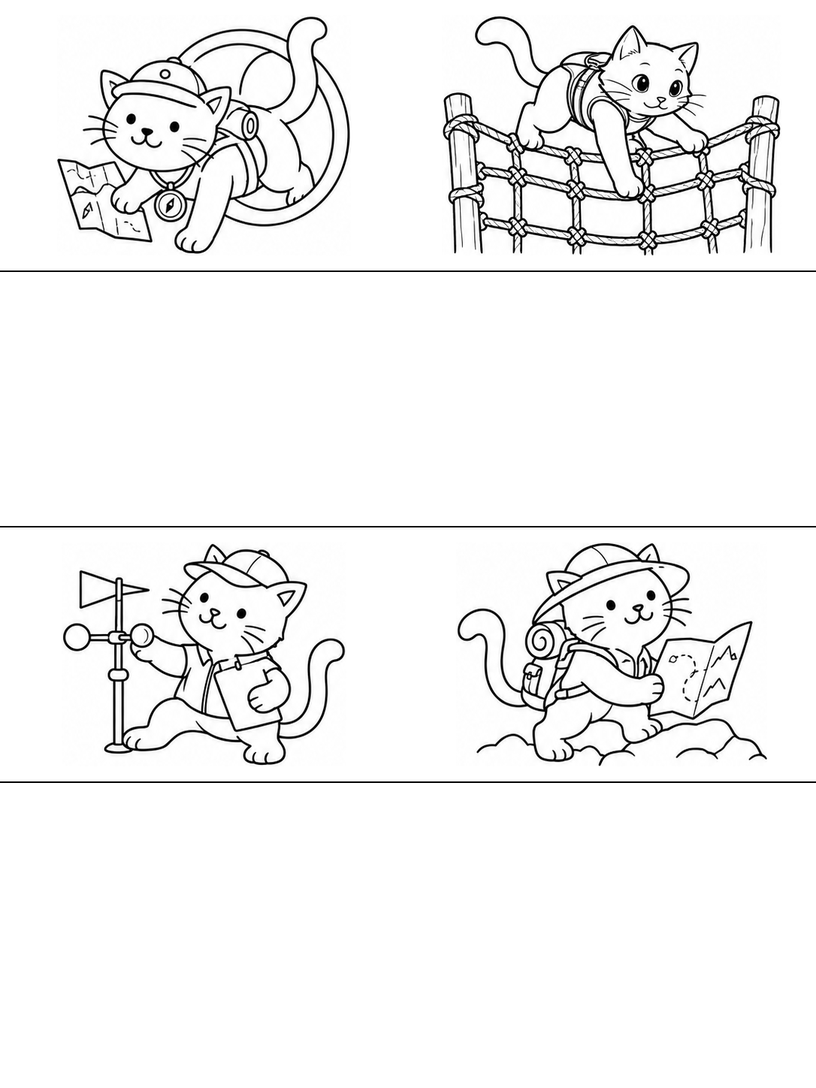
Page 5 includes a circular opening, rope-net scene, weather instrument and map reader on rock. Look for the cat partly within the circular frame. Try a simple oval frame and head below, then decide which part of the frame hides the body.
Draw a cartoon cat peeking from a box
Use the upper-right picture on page 1. Your drawing can be a plain cat without its hat or magnifying glass. The aim is to make one front edge and one hidden shape easy to understand, not to copy every accessory.
- Place the opening and the head. Sketch a broad box opening with a visible front edge. Put a rounded cat head just above it, adding two attached ears. Keep the head large enough to see clearly. The box can be a simple shape; its flaps do not need exact angles on a first attempt.
- Let the box hide the body. Add a short chest below the head, but stop its outline where the front edge covers it. Place one rounded paw over that edge. Leave out the hidden back segment instead of drawing every box line through the paw. Compare your overlap with the printed reference.
- Connect the visible parts and choose details. Add the other visible paw or a simple curved tail only if there is room. Place a small face between the ears. Keep the main opening readable before adding a prop. One clear paw over the front edge is enough to explain the peeking pose.
If the cat seems pasted onto the box, find a line that should disappear behind the front edge. Removing that small hidden segment may help. If the box feels too complicated, replace it with one low rectangular wall on spare paper. The same head-and-paw overlap can be practiced without drawing four flaps.
A box with a message
Imagine that the box holds a note for an adventure club. A cat peeks inside, finds it, and chooses a route from a simple map. Ask your child to pick the map's first mark: a dot, a curve or a little hill. Draw that mark in a blank band and tell the next part aloud. There is no need to illustrate a whole journey. If a friend looks into the same box from the other side, which head and paw would you still see?
Make the activity your own
For a gentler activity, color just the box and head, leaving the small equipment white. For another attempt, keep the box shape but move the head slightly to one side. Ask which paw would still be visible. Keep the drawing on spare paper if that change needs more room, and stop before adding accessories that hide the overlap you wanted to practice.
If the box flaps feel too busy, the Elementary cat prop guide offers a simpler paw meeting the outline of one object. When one front edge reads clearly, the Advanced approaching-paw study explores another way to suggest depth: a large near paw with smaller parts behind it.
Printing and file notes
Select one of the five Intermediate A4 sheets in your PDF reader's page range. Start with 100% / Actual size, look for cut edges in the print preview, and try one page. Use Fit if your printer needs more margin. For paper size and print settings, read the printing guide.
Worksheet questions
How is this different from the Elementary cat set?
These sheets use four references per page and give more room to turned bodies, support and overlap. Many scenes still contain fantasy equipment. The level label describes the illustrated drawing task, not a tested age group or a requirement to copy every detail.
Can we leave out hats, tools and other accessories?
Yes. Start with the head, body direction, supporting paw and the shape that hides part of the body. Adding more accessories is optional. They should not cover the contact or overlap you are trying to understand.
Can I choose a single page for printing?
Yes. Select one page from the five-page A4 PDF. Start with 100% / Actual size and inspect the preview for clipped edges, using Fit if necessary. Try one sheet before printing more.
Use and sharing
You may print these pages for personal, family or classroom activities. Keep the website credit on the sheets. Share this article link with other adults instead of redistributing or selling the PDF. Read the terms of use for the permission and its limits.
Creation and editorial note
The activity guide and page layout were prepared and edited for Coloring Pages Story, with AI assistance. The line art is AI-assisted. The page previews and five-page PDF have been checked digitally. No classroom trial or physical print test has been performed.
Comments
Comments are closed