

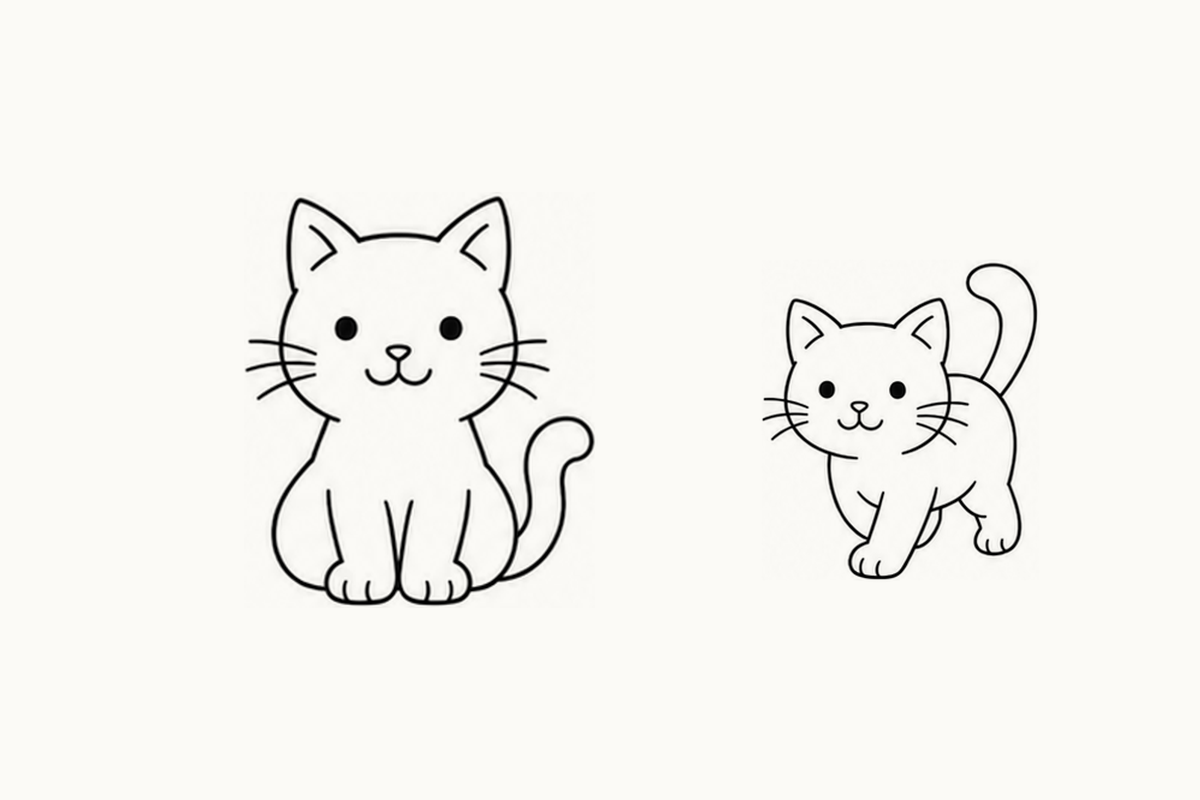
Choose a cat that looks ready for a nap, or one that seems about to spring. These beginner cat coloring pages offer five A4 sheets of rounded cartoon characters with room to try a drawing below. You can start by coloring a single ear or following a tail with your finger. The page is an invitation to notice a shape, rather than a list of pictures your child has to finish.
Download the five-page Beginner Cartoon Cat PDF (2.22 MB)
What is in this set?
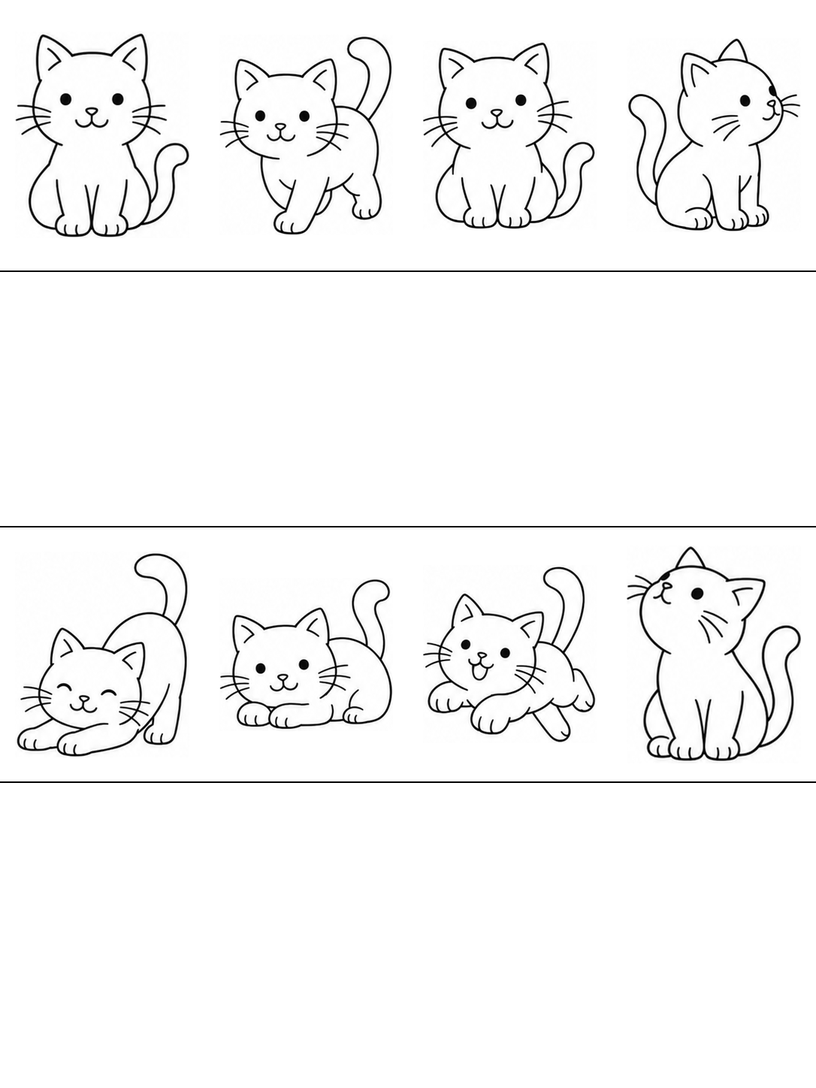
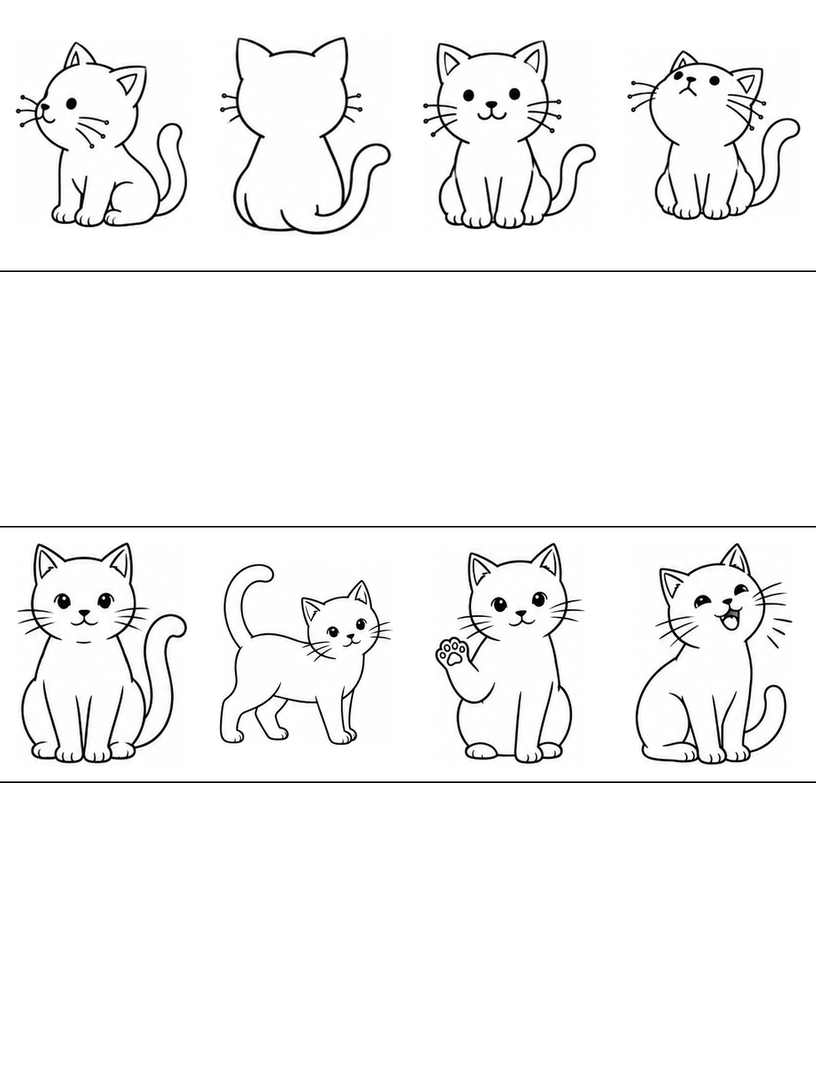
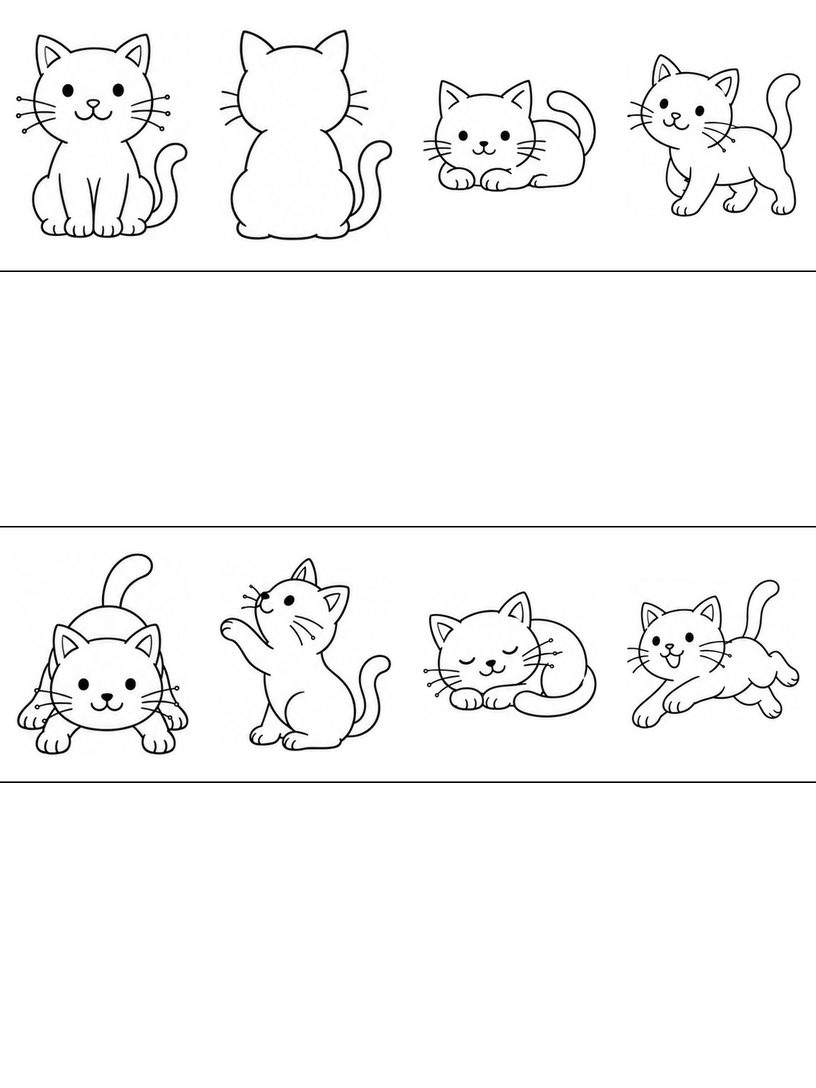
Each sheet has eight small references, four in the first band and four in the third, with two blank drawing bands. The cats sit, stretch, turn, curl up and move. Some silhouettes repeat, and one page includes a small ball. The rounded faces and occasional waving gestures are cartoon choices, not a record of real cat behavior. Beginner describes the drawing complexity, and you can choose a single pose to explore.
Before you begin
Look at the front-facing cat on page 1. Point to where each ear joins the head, then follow the cheek down toward the body. Ask your child which part they would like to color first. If they want to draw, offer spare paper for a larger cat; the small printed references do not require equally small practice drawings.
Look through the five sheets
Page 1 mixes sitting, standing, side-facing, stretching and low resting poses. Two front-facing sitting cats are very similar. Print one full page and compare those cats in its reference row; there is no separate row-only file. You can cover the other references with spare paper while you look, then move it aside to use the blank band. Try two fur colors on the repeated view rather than treating every pose as a new design.
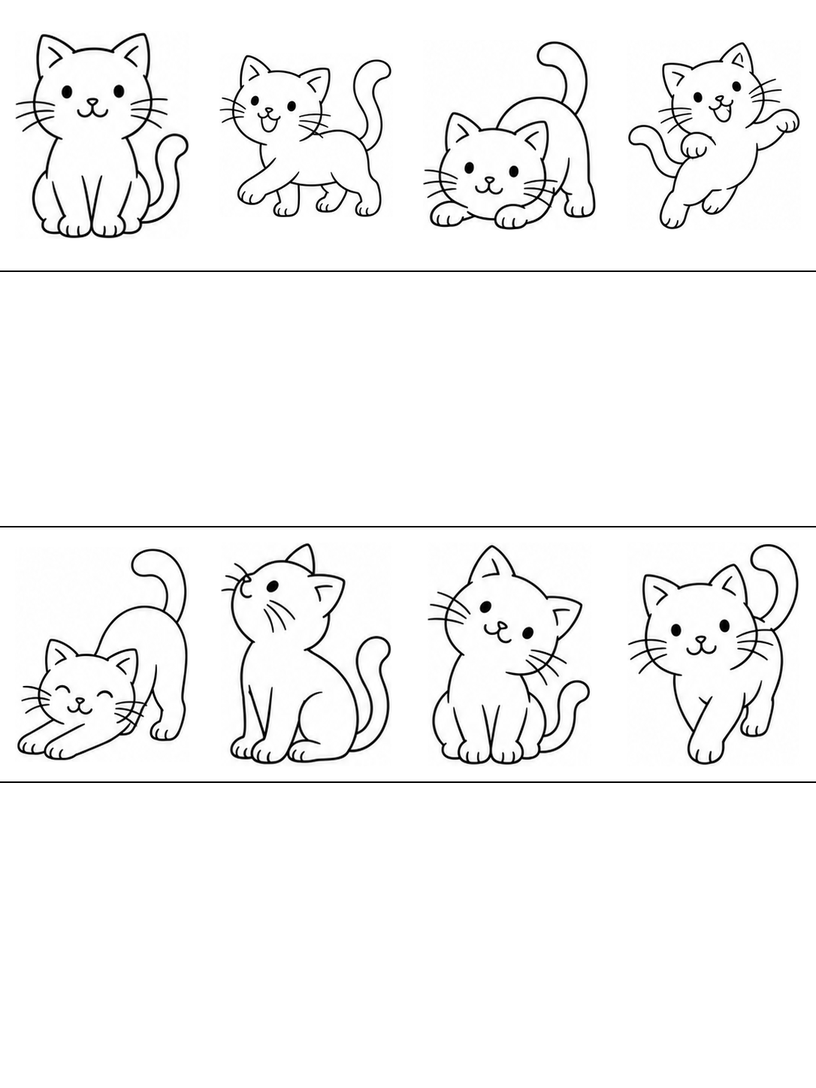
Page 2 adds a lifted-paw or jumping shape among familiar sitting and stretching forms. Compare the long, low stretch with the compact seated body. Draw one body oval in each direction in the blank band before adding ears, eyes or whiskers.
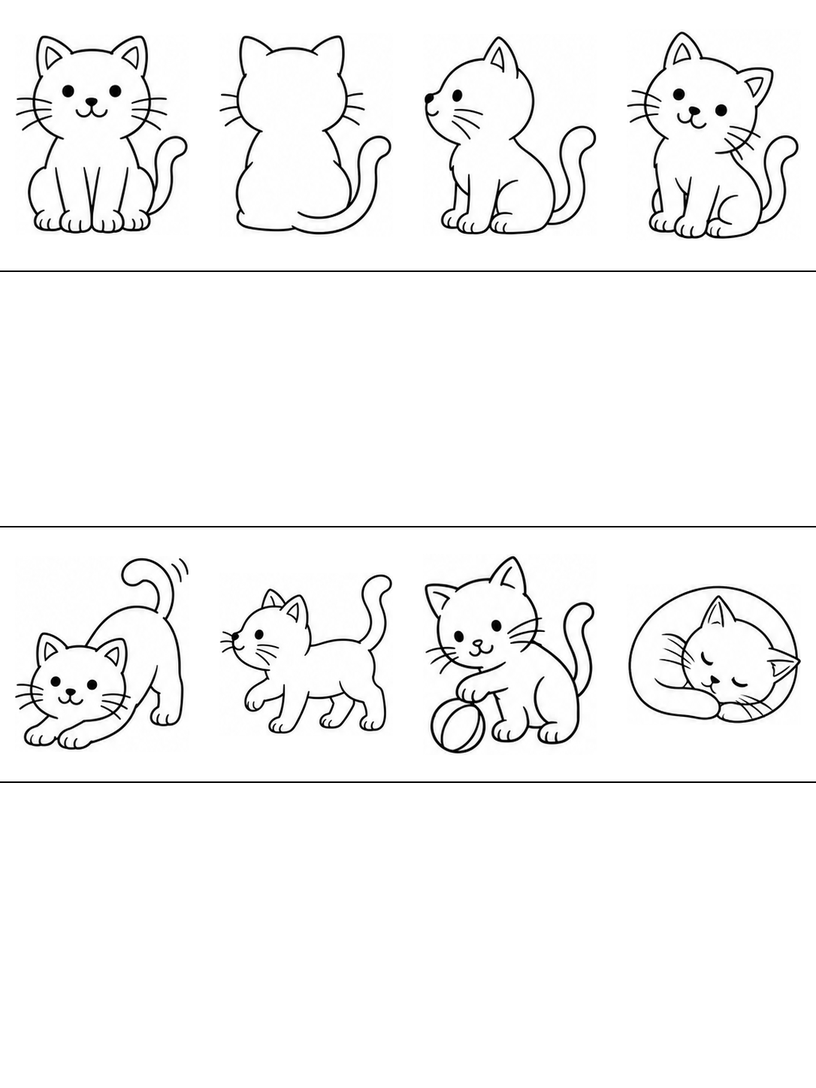
Page 3 includes a back view, a sleeping curl and a cat beside a small ball. Notice that the back-view head has no eyes or mouth. When drawing that view, leave its face blank instead of adding front-facing features to the back of the head.
Page 4 returns to front, back and side views, with a raised paw among the lower examples. Choose one cat and find where the tail begins at the rump. A tail should connect to the body, rather than float as a separate curved line beside it.
Page 5 includes a crouching front view, a walking profile, a sleeping cat and a running shape. Ask which cat looks longest and which looks most compact. Your child can color just those two, then draw a large curved back line underneath as a small first attempt.
Draw a seated cartoon cat
Use a front-facing sitting cat from page 1 or page 4. Make a light drawing in a blank band or on spare paper. Keep the first attempt to the head, body, paws and tail; face details can come after the larger shapes connect.
- Join the ears to a rounded head. Sketch a broad head shape and let two triangular ears grow from its upper outline. Keep their bases attached. If the ears float above the head, close those little gaps before adding inner-ear marks. A simple outside shape is easier to follow than several dark lines around the same edge.
- Place the seated body and paws. Draw a smaller rounded body beneath the head, widening it slightly near the bottom. Bring two short front legs down to rounded paws. Add a side haunch where the reference shows it. Keep a small white gap between the front legs so they do not become one wide column.
- Connect one tail and a simple face. Start the tail at the side of the lower body and curve it upward, returning with a second line. Place the eyes on either side of the face, then a small nose and two mouth curves. Add only a few whiskers after the main shape is clear.
If the cat looks top-heavy, compare the width of the head with the body before changing its face. If a paw has disappeared, give it more space on a new drawing rather than squeeze in extra toe lines. A cat with two dots for eyes and a clear tail can feel complete without fur texture or decorative patterns.
A place for a nap
Imagine a small cat choosing where to rest. It stretches, walks a little, then curls into a round shape. Ask your child to find three printed poses that could tell that story. Tell the sequence aloud and draw only the resting cat in the blank band. A single rounded outline can become a cushion. Would the cat curl toward the left or right? Your child can point to the chosen direction before adding a tail. Leave room beside it for a second cat if the story needs a friend.
Make the activity your own
For a gentler turn, color one large body area and leave the small face details alone. For another drawing attempt, keep the same sitting body and change only the tail's curve. Your child can also compare a front and back view without drawing either one. Noticing which features disappear is useful work, even when the practice band stays mostly white.
When the head, paws and tail connect clearly, the Elementary cat-and-prop activity offers one new question: where does a paw meet a watering-can handle? If your child likes finding hidden shapes, try the Intermediate cat-in-a-box guide together and point to the box edge that covers part of the body before drawing anything.
Printing and file notes
Select one of the five Beginner A4 sheets in your PDF reader's page range. Start with 100% / Actual size, look for cut edges in the print preview, and try one page. Use Fit if your printer needs more margin. For paper size and print settings, read the printing guide.
Worksheet questions
Are all forty printed cat references different?
No. There are eight references on each of five sheets, but several sitting, stretching and moving shapes recur. Some pages also show small variations in face or body style. Check the full previews if you want a particular pose rather than a repeated-practice set.
Are these realistic cat drawings?
They are rounded cartoon cats with simplified faces and occasional imagined gestures. Use them for shape and pose drawing, rather than as an anatomy or behavior guide. On a back view, follow the actual reference and leave the front facial features out.
Can I print one page and draw larger cats beside it?
Yes. Select one page from the five-page A4 PDF and keep spare paper beside it. Start with 100% / Actual size and check the preview for clipped edges; use Fit if needed.
Use and sharing
You may print these pages for personal, family or classroom activities. Keep the website credit on the sheets. Share this article link with other adults instead of redistributing or selling the PDF. Read the terms of use for the permission and its limits.
Creation and editorial note
The activity guide and page layout were prepared and edited for Coloring Pages Story, with AI assistance. The line art is AI-assisted. The page previews and five-page PDF have been checked digitally. No classroom trial or physical print test has been performed.
Comments
Comments are closed