

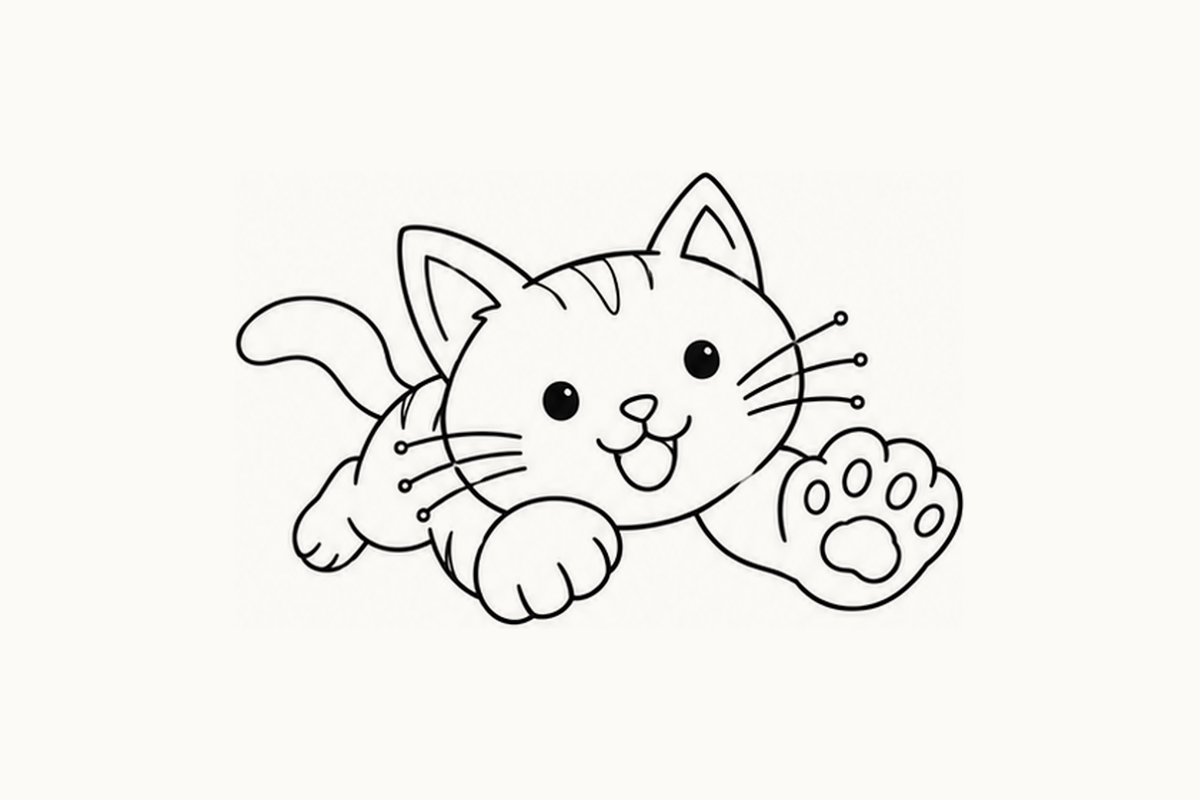
One paw reaches toward you and seems much larger than the body behind it. That is a useful place to begin these advanced cat coloring pages. The five A4 sheets pair two larger cartoon references with blank drawing bands. You can color the near paw first, compare the outline with a side view, or make one light rehearsal on spare paper. The main challenge is which part comes forward, rather than how much detail you add.
Download the five-page Advanced Cartoon Cat PDF (1.45 MB)
What is in this set?
A reference sits in the first band and another in the third, with drawing space below each. The set includes leaps, a sloping rock, foliage, a splash, a glider and an arched opening. These are fantasy illustrations with simplified bodies and imagined equipment. They are not real-cat behavior or activity instructions. Advanced describes the perspective and pose problem, and small details remain optional.
Before you begin
Look at the upper reference on page 1. Point to the big paw pad and follow the leg back toward the chest. Then compare the smaller parts behind it. Ask your child which shape feels closest before you offer a demonstration. If the whole pose looks busy, draw the paw and a small body oval separately first, leaving the face for later.
Look through the five sheets
Page 1 pairs an approaching cat with a side-view leap across an illustrated gap. Compare the near paw in the upper picture with the longer side silhouette below. They solve different shape problems, so do not try to give both drawings identical body proportions.
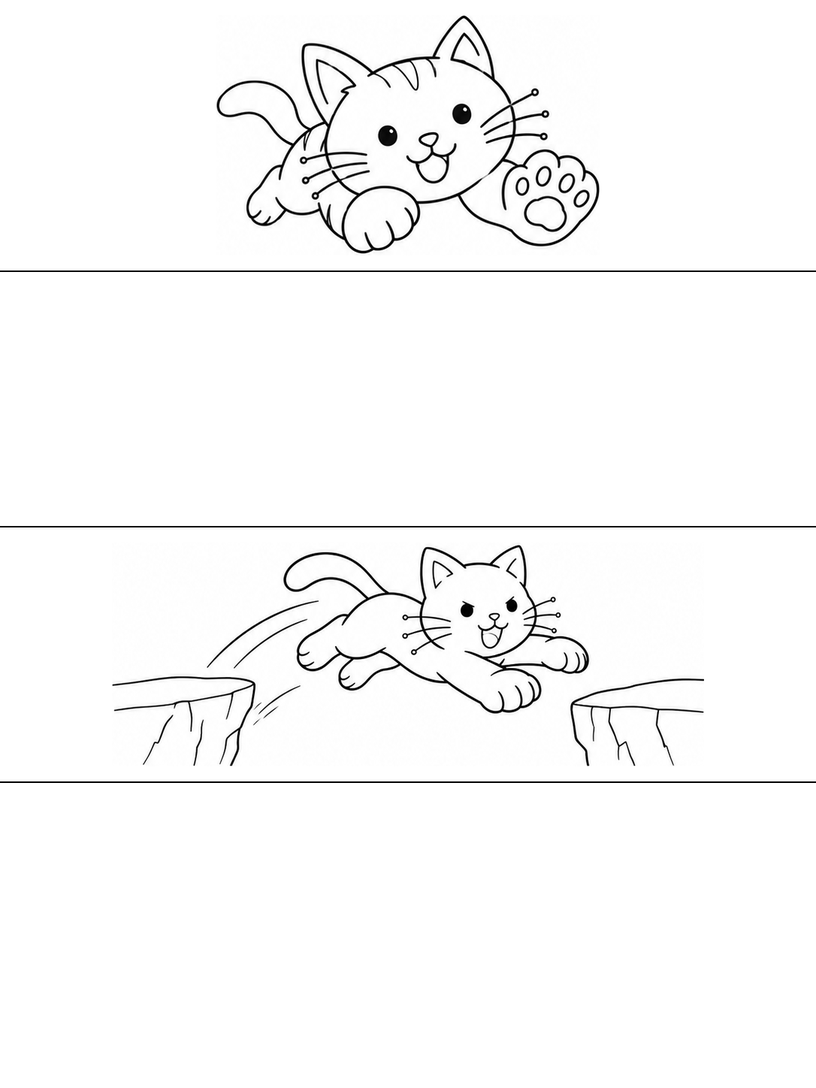
Page 2 shows a leap through foliage and a wind-swept flying pose. Find the cat's outside edge before coloring the leaves or motion lines. Use a different color on nearby foliage so its shapes do not merge with the paws and tail.
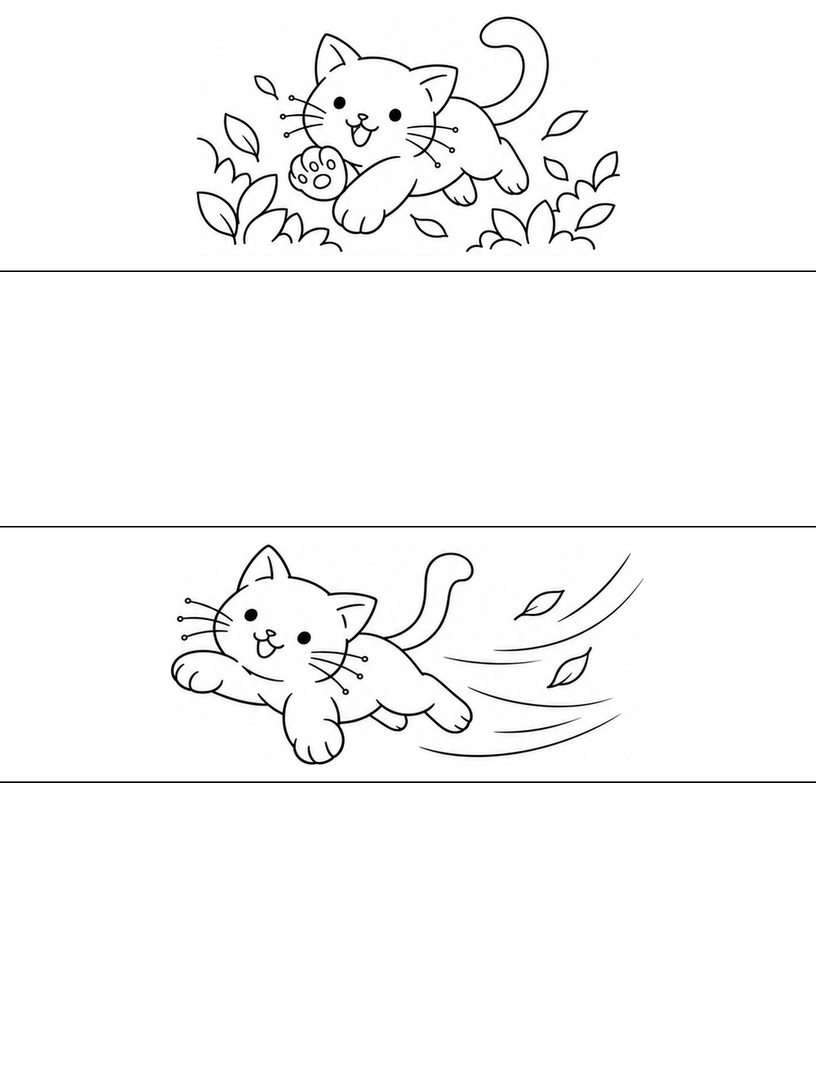
Page 3 pairs a sloping-rock pose with a backpacked character reaching across a gap. Follow the front paw to its contact point. In the blank band, sketch the support and a large body direction first. Equipment and texture can be left out while those parts are checked.
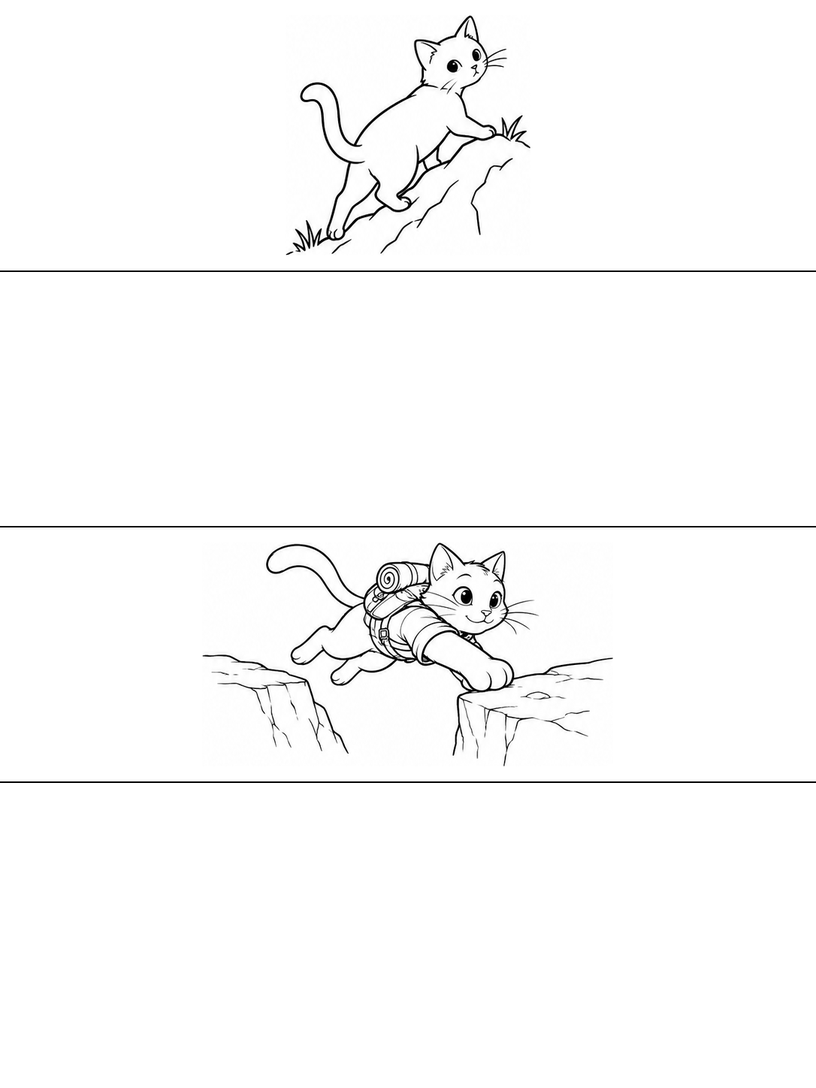
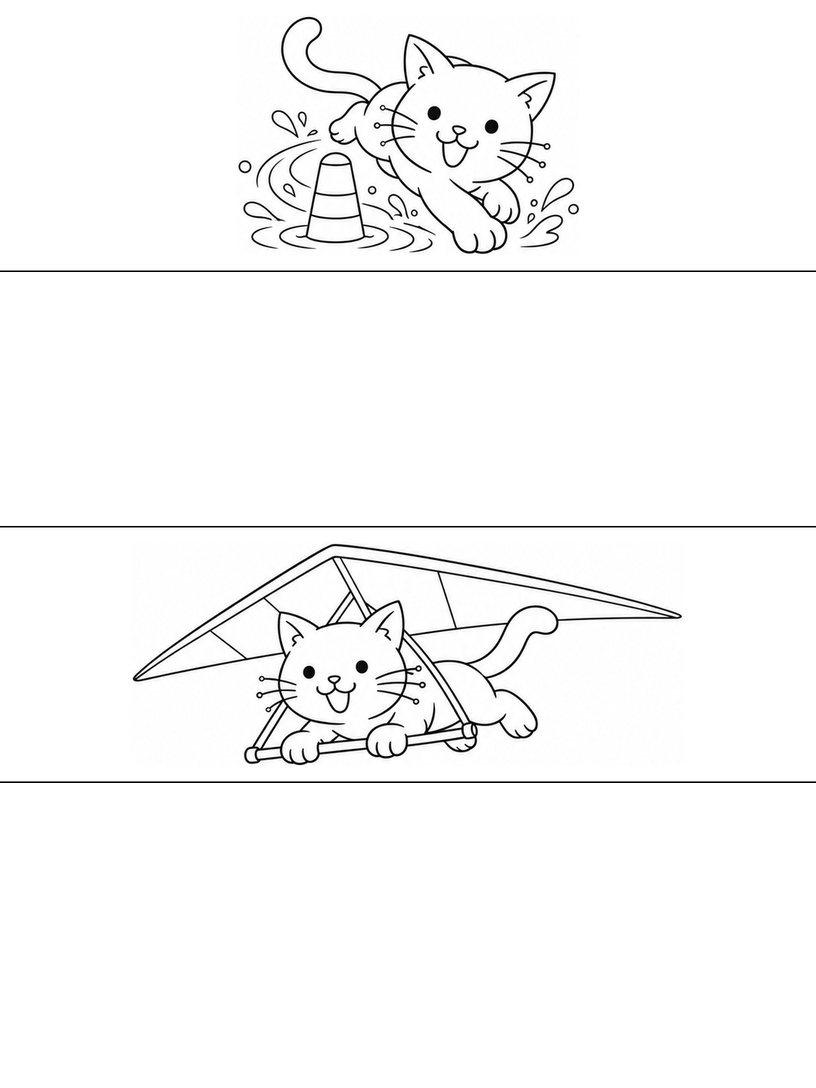
Page 4 includes a splash beside a cone and a character beneath a glider wing. Choose the glider scene to compare straight supporting bars with the cat's curved body. Treat the flight equipment as a fantasy drawing element, not an explanation of how a real cat could fly.
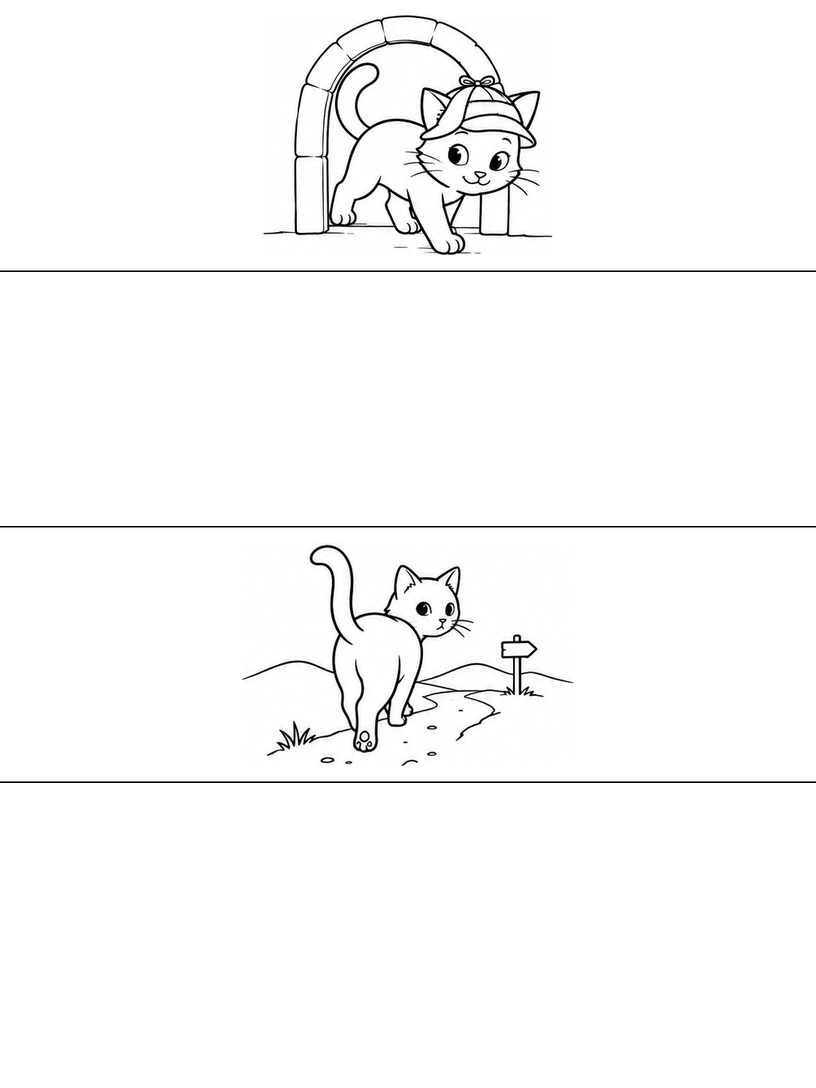
Page 5 shows a cat coming through an arch and another looking back beside a path. The arch example helps you see which leg passes in front of the opening. The lower view shows the body turned away while the head looks back; keep that difference when drawing.
Draw a cartoon cat with one paw coming forward
Use the upper picture on page 1. A larger sketch on spare paper may be more comfortable than a tiny copy. You can omit the toe pads on the first try and add them only after the large near and far shapes are clear.
- Set the head and smaller body behind it. Sketch the broad head and a smaller body shape trailing away from it. Tilt both to follow the printed pose. Leave space in front for the large paw. If the head already reaches the paper edge, start a fresh, smaller sketch rather than squeeze the paw into a narrow gap.
- Bring the near paw toward the viewer. Draw a broad rounded paw in the open space and connect it back toward the chest. Compare its width with the farther limbs. Let the near shape cover the connecting part behind it. Do not shrink that paw merely to make every limb the same size; the difference is the drawing task.
- Finish the visible silhouette before small marks. Add the farther visible paws and one tail connected at the rump. Stop hidden lines behind the near paw or body. Then decide whether to add the pad shapes, face and whiskers. Check that the body still reads as one connected character before adding movement lines or a scene.
If the big paw looks detached, follow the route from its edge back to the chest. A missing connection or an extra crossing line may be the problem. If the entire pose feels flat, try one larger near paw and a smaller farther paw on a new sketch. More fur marks or longer speed lines will not replace that size relationship.
A leaf worth looking back for
Imagine a cat spotting a bright paper leaf and turning back to tell a friend. Would the approaching pose or the looking-back picture on page 5 show that moment? Let your child draw the chosen pose, then add a small leaf beside it. Tell the friend's answer aloud instead of filling the band with speech. Move the imagined leaf and choose again: does the near paw reach toward it, or does the head turn while the body keeps going?
Make the activity your own
For a gentler turn, color the near paw and head while leaving the background white. For another drawing attempt, compare a front-approaching sketch with a side silhouette. Keep the same simple face so the pose, rather than added decoration, is what changes. Stop after one clear connection or size comparison if the detailed scenes begin to distract from that goal.
If the near paw looks detached, return to the Intermediate cat overlap guide and practice a clear head-and-paw connection around a simple box edge. For a gentler drawing break, the Beginner seated-cat activity keeps the body plain so your child can concentrate on attached ears and a curved tail.
Printing and file notes
Select one of the five Advanced A4 sheets in your PDF reader's page range. Start with 100% / Actual size, look for cut edges in the print preview, and try one page. Use Fit if your printer needs more margin. For paper size and print settings, read the printing guide.
Worksheet questions
Are these five full-page cat portraits?
No. Each A4 sheet contains two references and two blank drawing bands. Some scenes have more detail than others. Check the complete previews to judge the size of the actual line art; the cover is an editorial selection, not the printable page layout.
Why does one paw look much larger than another?
The approaching pose uses a larger near shape and smaller or partly hidden farther parts to suggest depth. Compare that relationship with the chosen reference. It is an illustration exercise, not an exact anatomical measurement or a reason to make every paw oversized.
Should I print the whole set before choosing an activity?
You can select one page from the five-page A4 PDF first. Start with 100% / Actual size, inspect the preview and try Fit if your printer clips edges. Printer margins vary, so try one sheet before printing more.
Use and sharing
You may print these pages for personal, family or classroom activities. Keep the website credit on the sheets. Share this article link with other adults instead of redistributing or selling the PDF. Read the terms of use for the permission and its limits.
Creation and editorial note
The activity guide and page layout were prepared and edited for Coloring Pages Story, with AI assistance. The line art is AI-assisted. The page previews and five-page PDF have been checked digitally. No classroom trial or physical print test has been performed.
Comments
Comments are closed