

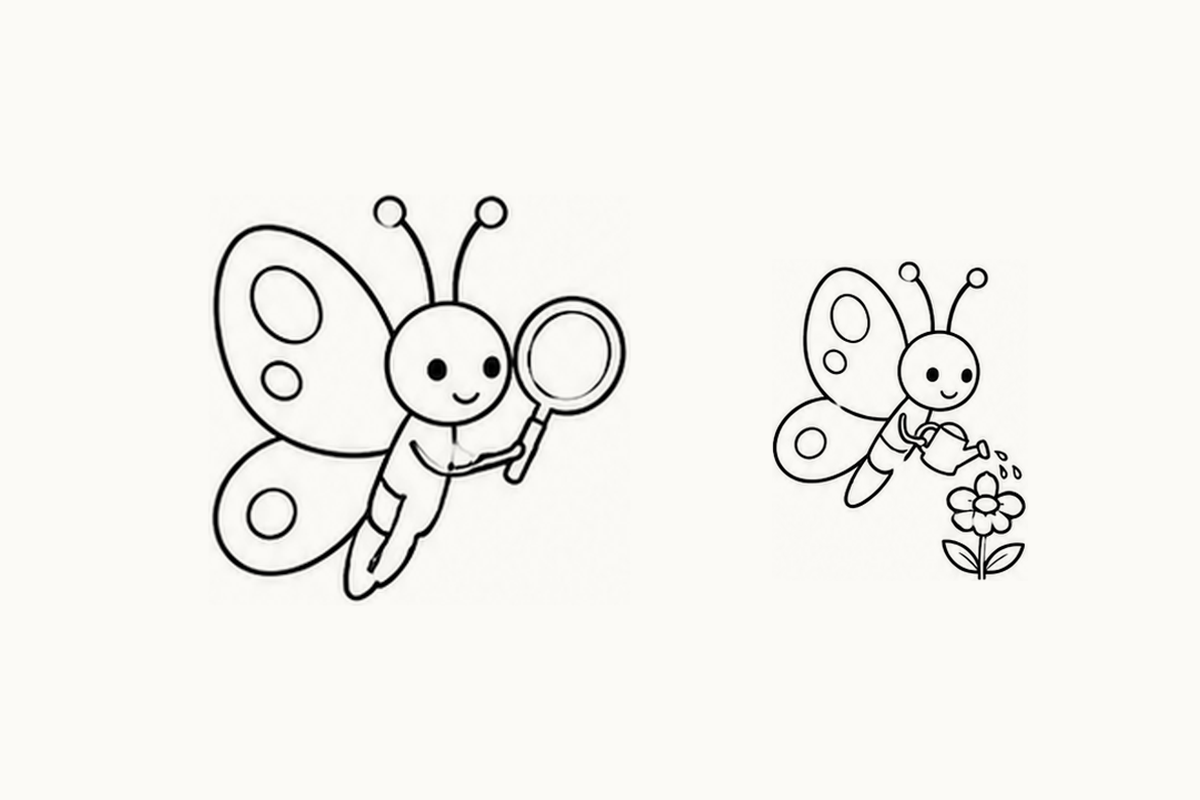
A butterfly character has found a watering can. Where does its arm meet the handle, and where does the water go? These elementary cartoon butterfly coloring pages turn a small picture into a noticing game. The five A4 sheets include winged characters, simple props and blank bands for your own drawing. Pick one scene that interests your child, rather than asking them to color every small shape.
Download the five-page Elementary Cartoon Butterfly PDF (2.58 MB)
What is in this set?
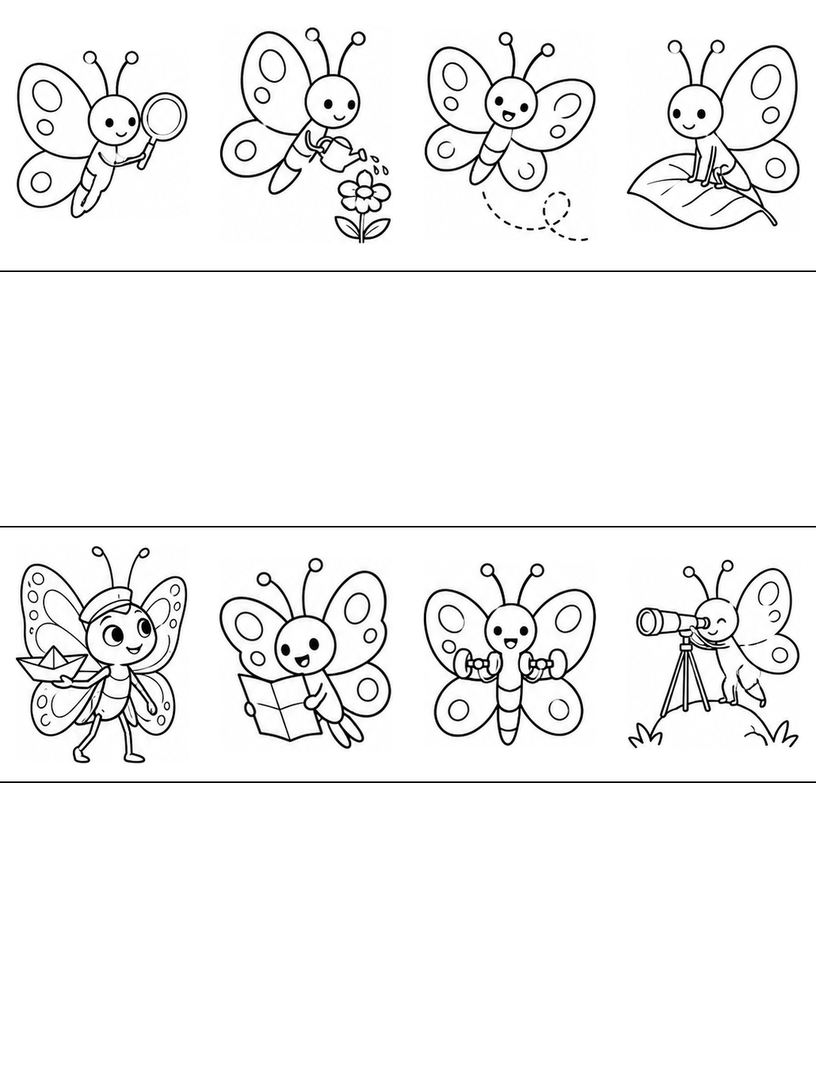
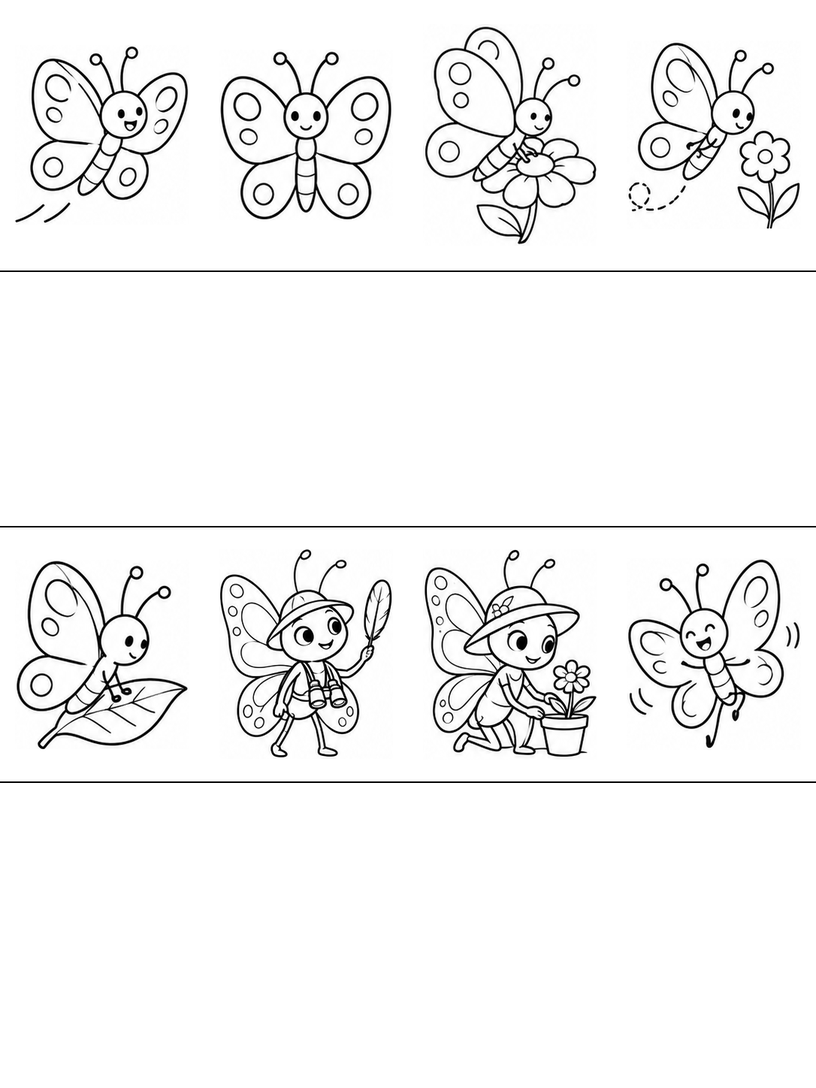
There are eight references on each sheet, four in the first band and four in the third, with blank drawing bands underneath. The style varies: many figures have rounded insect-like bodies, while a few look more like dressed, human-shaped winged story characters. Books, hats and tool-holding gestures belong to those imagined scenes. These are fantasy coloring and drawing activities, not examples of real butterfly anatomy or behavior.
Before you begin
Find the watering-can picture near the top of page 1. Ask your child to point to the can before choosing a color. Notice the small space inside its handle and the drops beside the spout. You can leave those spaces white. If the scene feels busy, color only the can and one wing, then stop or choose a simpler character on page 2.
Look through the five sheets
Page 1 includes a magnifying glass, watering can, map and telescope, alongside other winged characters. Choose a prop with a simple outline. Draw its large shape in the blank band first, then add the character beside it. The object does not need every little detail to be recognizable.
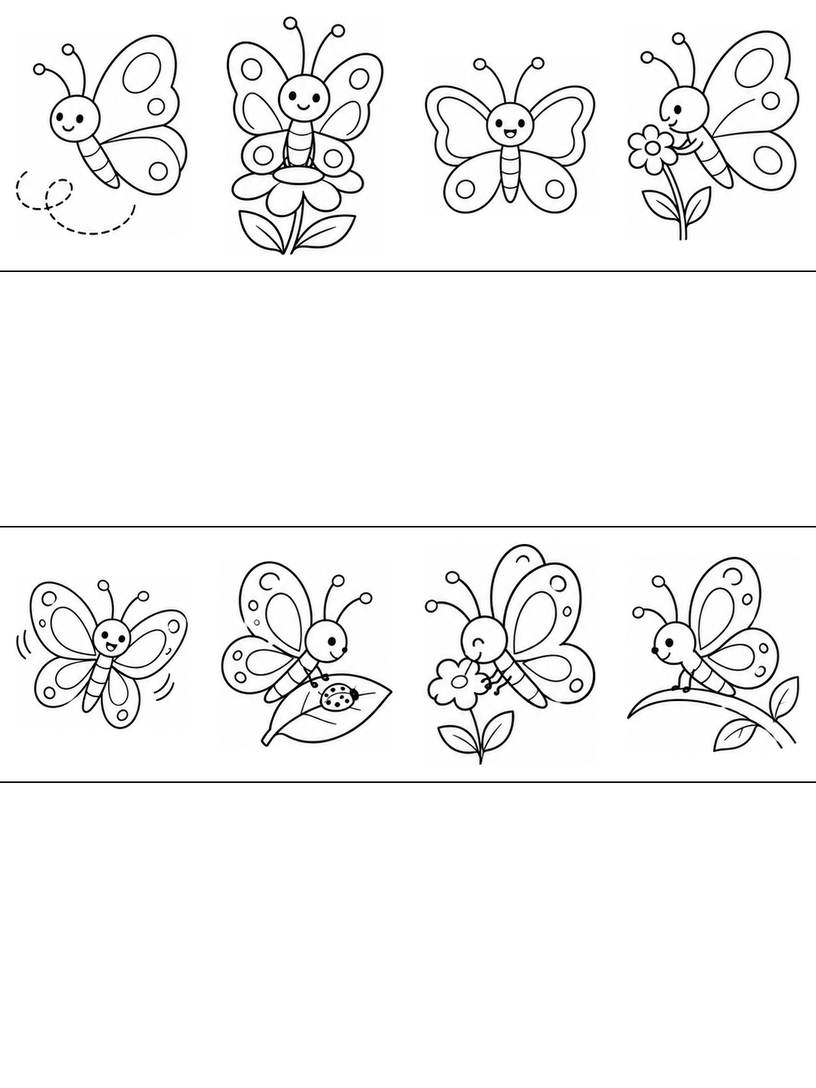
Page 2 moves between flying, resting and flower-facing characters. Look for the character above a leaf with a small spotted insect. Give the leaf and the wing different colors so their outlines stay separate. The smaller insect is part of that picture, not a separate drawing step you must copy.
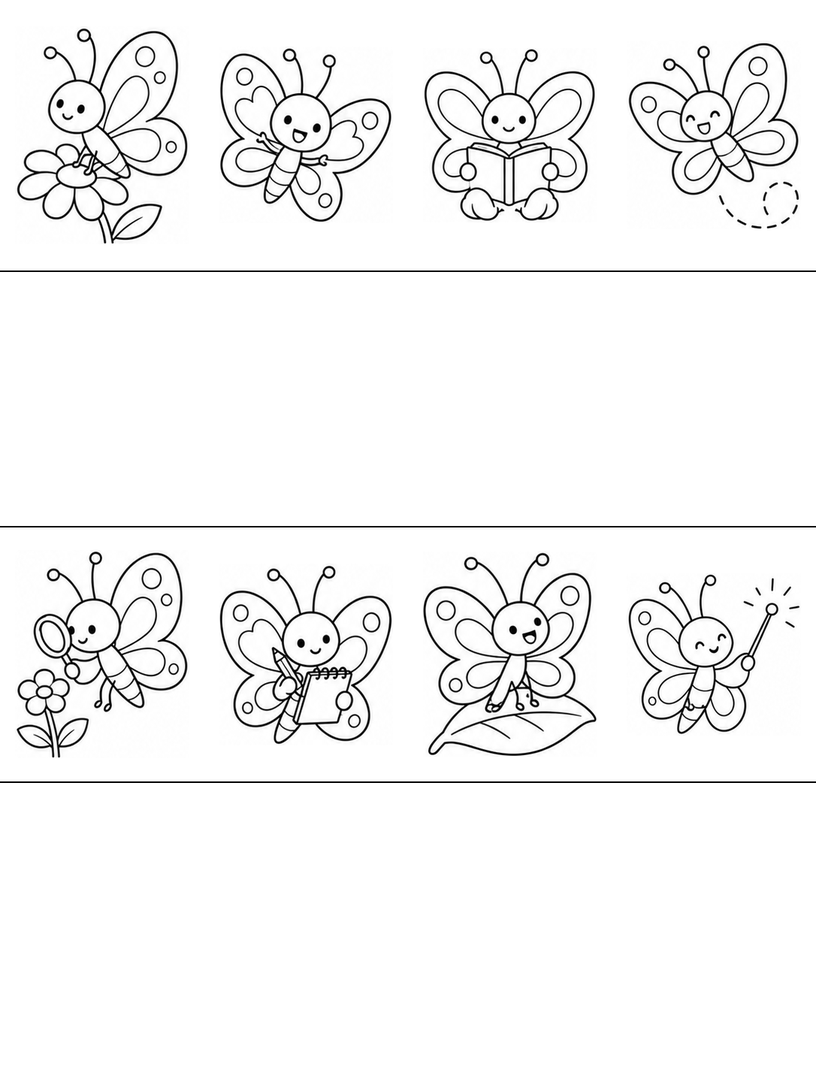
Page 3 includes a reader, a notebook holder, a magnifying glass and a wand. Try the open book: compare its two large halves before looking at the hands. Your child can draw a plain book shape below and decide what the winged reader might be reading.
Page 4 returns to flying and flower scenes, with a book and a large pencil among the props. Point to where a character overlaps its object. When drawing, stop the object's hidden line at the front hand or body instead of letting both outlines cross through each other.
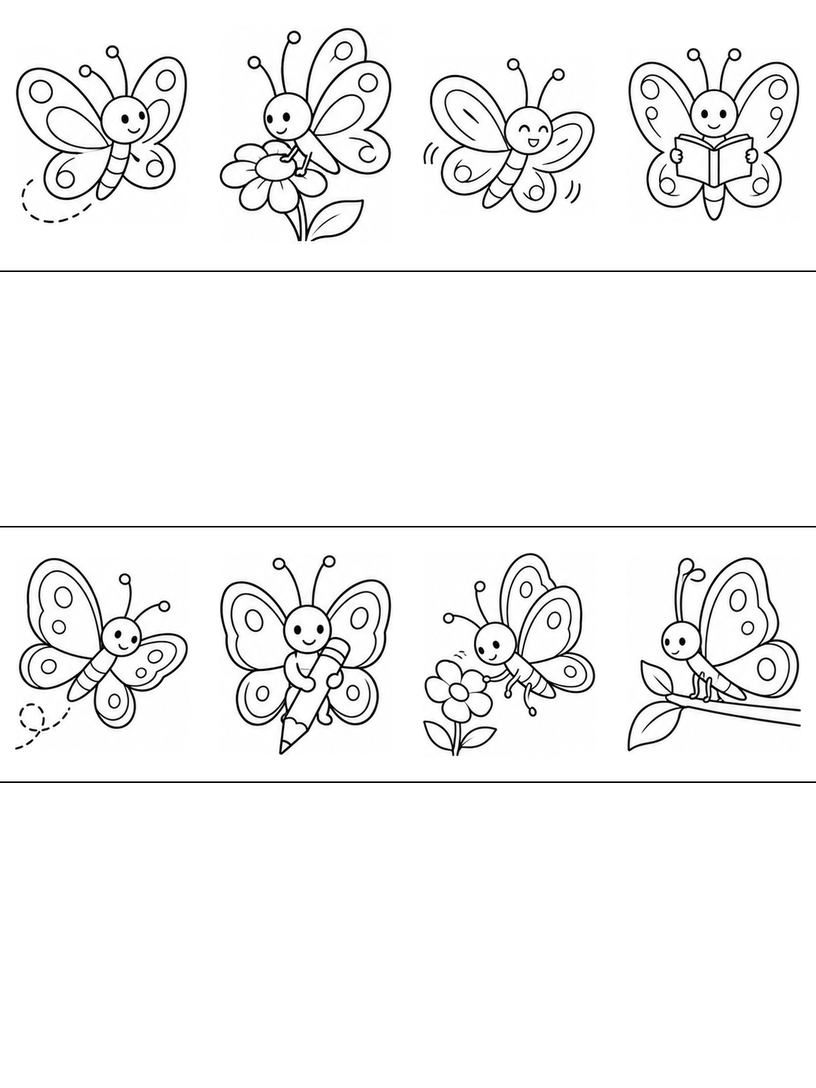
Page 5 includes a leaf-resting character and more human-shaped garden explorers, including one beside a potted flower. Choose one small flower or leaf to repeat in the blank space. Be clear that the clothing and tool use are part of the cartoon story, rather than things real butterflies do.
Draw a winged character beside a watering can
Use the watering-can scene on page 1 as a guide, keeping its details optional. You can make a larger drawing on spare paper if the small outline is difficult to follow. Begin with the shapes you want to see most clearly.
- Place the character and the can. Make a small head and a short body, then leave a gap beside them for the can. Sketch a simple can body and a short spout. Keep the head and prop from crowding together. If they touch by accident, move the can on a fresh attempt instead of filling the gap with dark lines.
- Attach the wings and the handle. Add one broad upper wing and a smaller lower wing on each visible side, following the chosen reference. Draw a loop for the can's handle and bring one simple cartoon arm to it. Keep a small white opening inside the handle so its shape remains readable.
- Choose a few marks that explain the scene. Add the face, antennae and two or three wing spots if you want them. A few separate drops can lead from the spout toward a flower. Stop the can's back outline where a front arm covers it. You can leave patterns and the flower out when the main connection is clear.
Look at the handle opening before adding color. If it has disappeared, redraw it larger on spare paper or choose the book scene instead. For coloring, use one color on the prop and a different family of colors on the wings. It is fine to leave narrow wing patterns white rather than force a pencil into every small space.
A garden delivery
Make up a garden errand. A winged character carries a book to a friend, then pauses beside a flower. Ask, 'What did the character notice?' Choose the reader on page 3 and draw a plain book in the blank band. Your child can tell you the title instead of writing tiny letters. A dot beside a curved line might become the friend's doorway. Will the character stop to read, or leave the book and return later? Let that choice guide one more small drawing.
Make the activity your own
For a gentler turn, choose a winged outline without a prop and color one large wing shape. For more drawing, try the same simple book twice: once beside the character and once partly covered by its hands. Ask which edge is in front. Avoid making the challenge harder simply by adding more spots, clothing or tiny objects to the page.
For a quieter start without small props, choose the Beginner butterfly sheets and explore one wing pattern before bringing an object into the scene. If your child enjoys making the handle and arm meet, the Intermediate butterfly support activity explores another connection: a character resting on a branch or rock.
Printing and file notes
Select one of the five Elementary A4 sheets in your PDF reader's page range. Start with 100% / Actual size, look for cut edges in the print preview, and try one page. Use Fit if your printer needs more margin. For paper size and print settings, read the printing guide.
Worksheet questions
Are these realistic butterfly coloring sheets?
No. They are cartoon fantasy scenes with varying winged character styles, including some more human-shaped figures. Tools, clothes and reading gestures are imagined. Use a real nature reference for butterfly anatomy or behavior; this set is for coloring and drawing a fictional character.
How many pages and pictures are in the download?
This PDF contains only five Elementary A4 sheets. Each has eight small references and two blank drawing bands. Some shapes and scene ideas recur. It is not a full four-level workbook or a promise of forty completely different butterfly designs.
Can we use just one page or one large drawing?
Yes. Select a single PDF page when printing, or keep the sheet beside a larger drawing on spare paper. Start with A4 and 100% / Actual size, check the print preview, and use Fit if edges clip.
Use and sharing
You may print these pages for personal, family or classroom activities. Keep the website credit on the sheets. Share this article link with other adults instead of redistributing or selling the PDF. Read the terms of use for the permission and its limits.
Creation and editorial note
The activity guide and page layout were prepared and edited for Coloring Pages Story, with AI assistance. The line art is AI-assisted. The page previews and five-page PDF have been checked digitally. No classroom trial or physical print test has been performed.
Comments
Comments are closed