

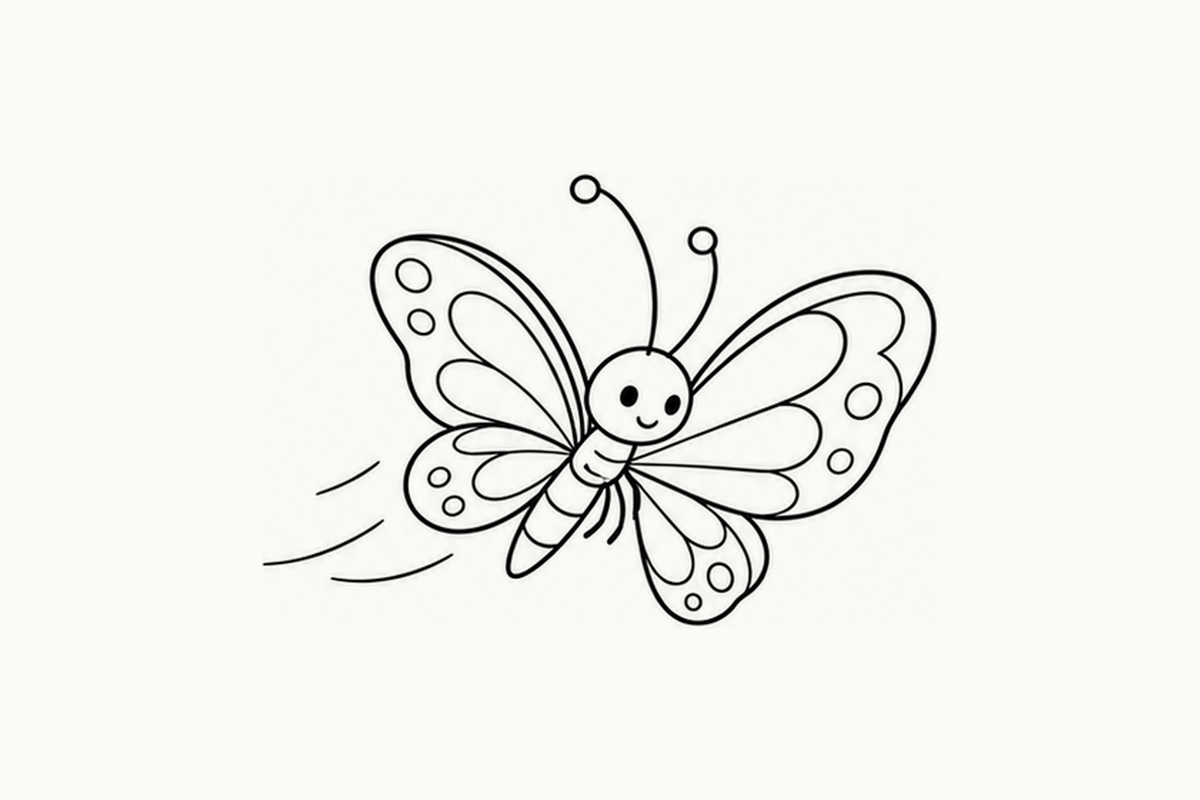
One wing seems to come toward you while another slips behind the body. That difference gives these advanced cartoon butterfly coloring pages their main drawing challenge. The five A4 sheets each have two larger references and room to try a pose below. Start with a wing edge or body direction that interests your child. The fine patterns, costumes and scene details can wait until the larger shapes make sense.
Download the five-page Advanced Cartoon Butterfly PDF (1.44 MB)
What is in this set?
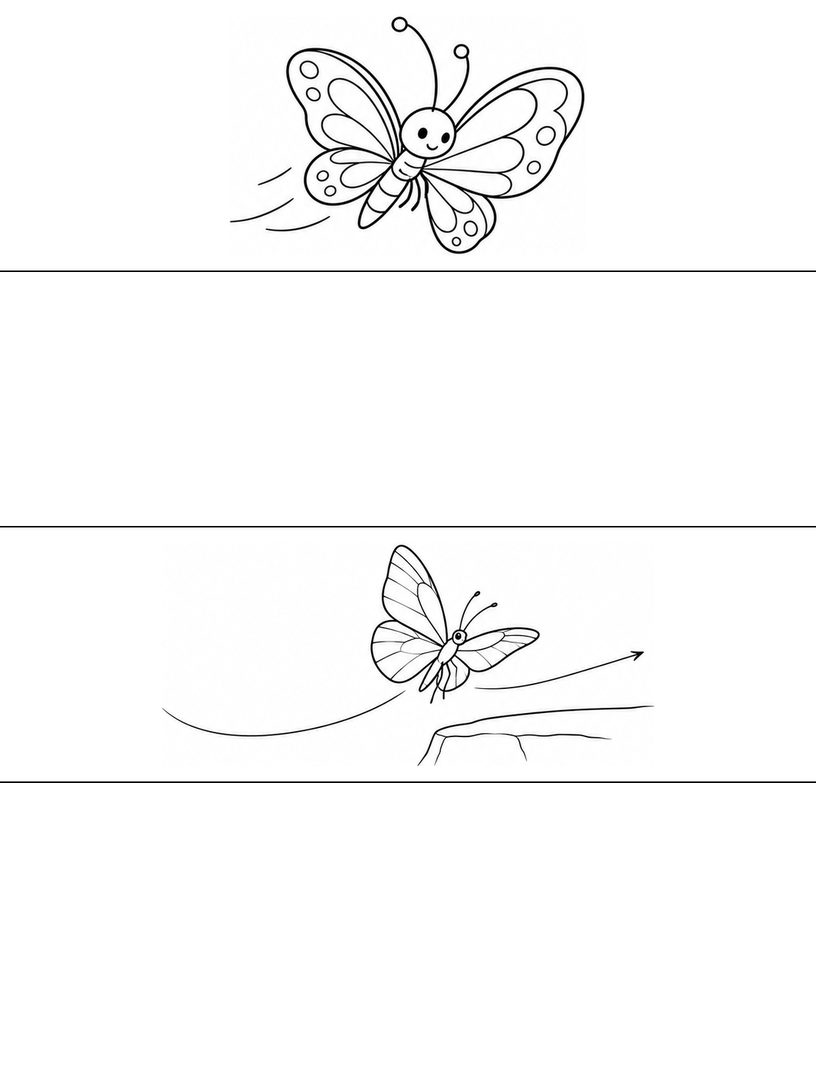
A reference occupies the first band and another the third; the second and fourth bands are blank drawing space. The set moves from simple flight shapes to more detailed, equipped cartoon characters. Cameras, goggles, hats and imagined actions are story devices. They are not observations of real insect behavior. Advanced describes the perspective and overlap task, and you can choose a simple outline before a detailed scene.
Before you begin
Look at the upper picture on page 1. Compare the large wing shapes on either side of the body, then point along the direction the character is traveling. Let your child choose whether to color that picture or draw just its outer shape. A pencil on spare paper can leave more room than the practice band for the first attempt.
Look through the five sheets
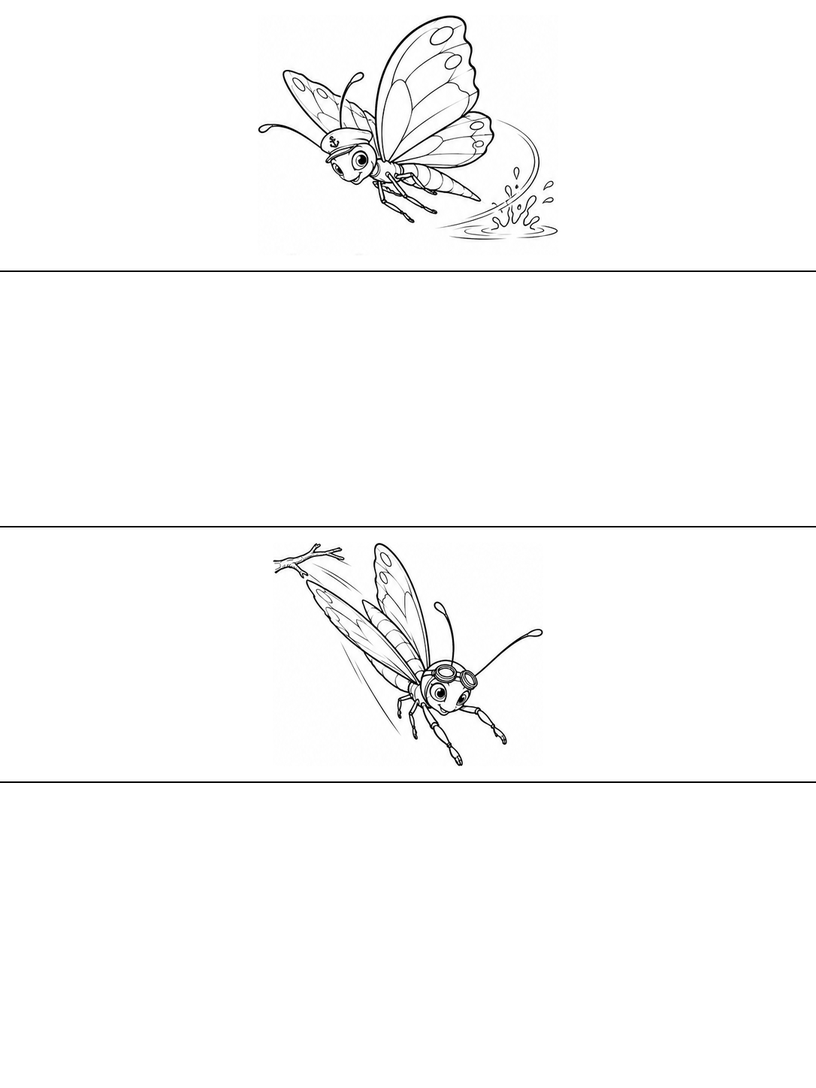
Page 1 pairs a broad, approaching cartoon flyer with a smaller turning figure above a ledge. The upper picture is the simplest place to compare wing sizes. Trace the long outside curves in the air before worrying about the round spots or motion lines.
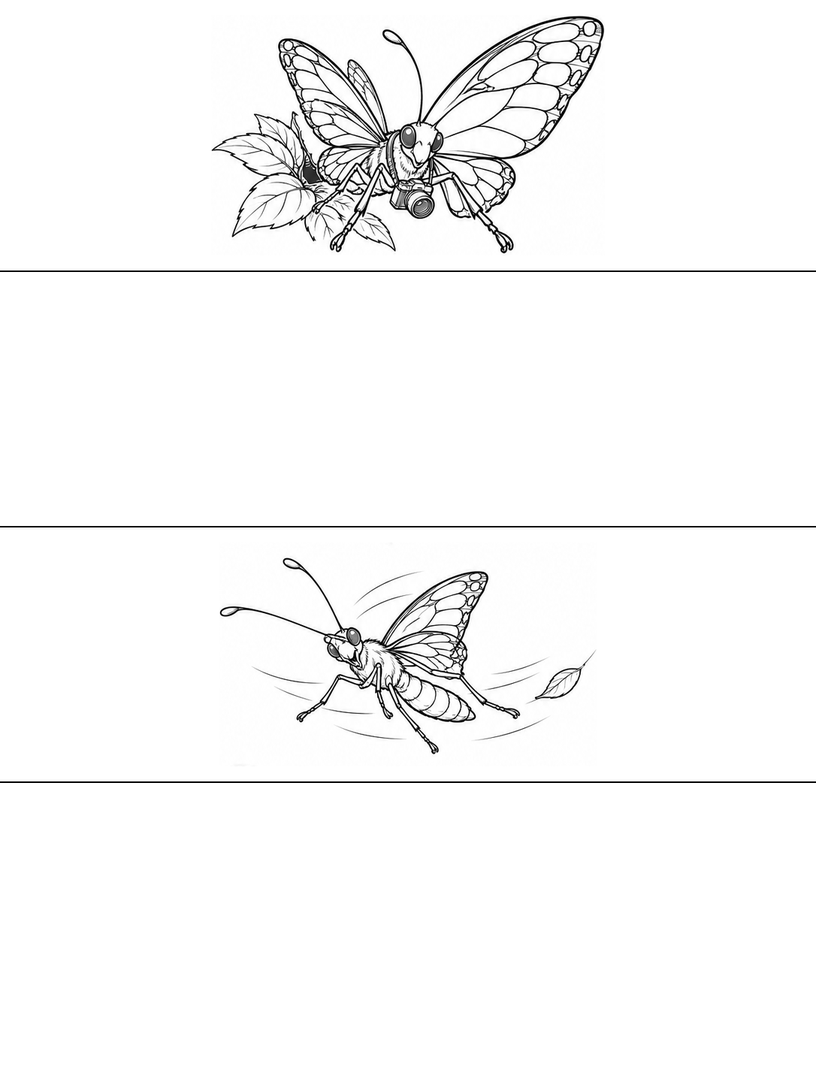
Page 2 shows a camera-carrying character near leaves and a goggled flyer in a wind-swept scene. The closer wing is prominent while farther parts are smaller or hidden. Choose one leaf and one wing color so those overlapping outlines remain easy to separate.
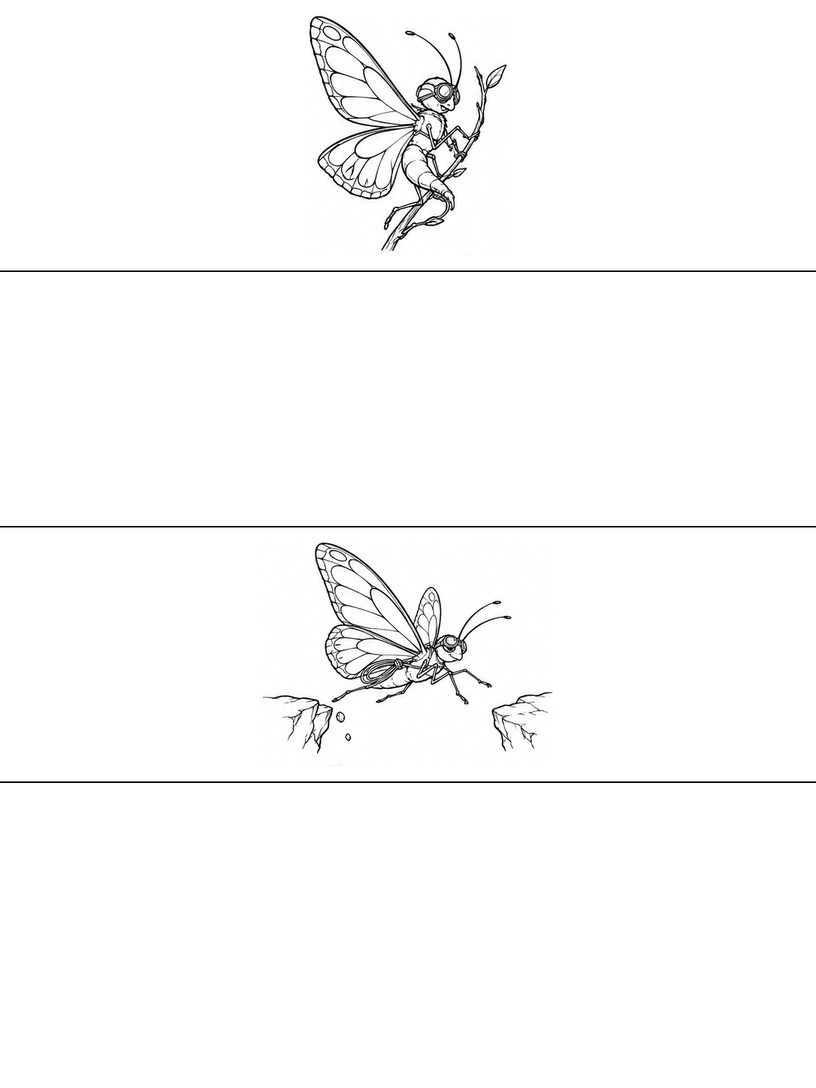
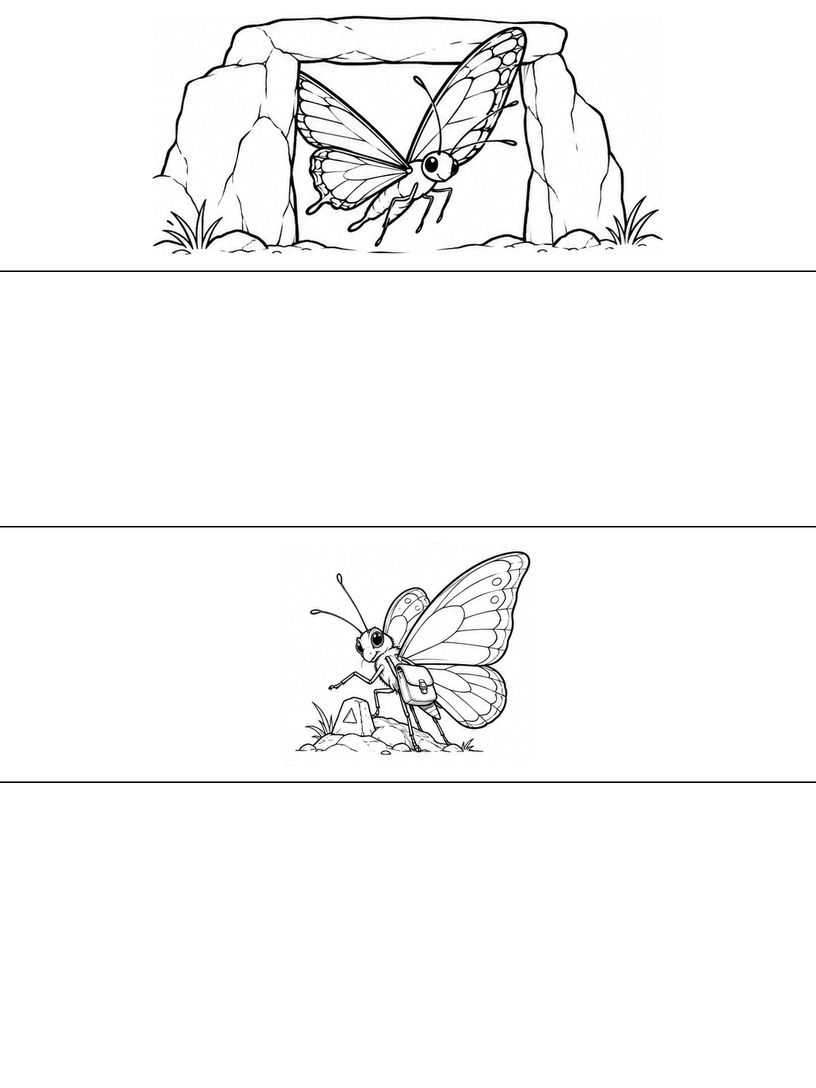
Page 3 pairs a character on a stem with another crossing an illustrated rock gap. Follow the curved body and find which wing sits behind it. If the details feel crowded, draw only the body and two large wing outlines in the blank band.
Page 4 includes a turning character above a splash and a downward-moving goggled figure near a branch. Notice that the body direction differs from a straight upright pose. Your child can make one light direction line first, then fit the body and wings around it.
Page 5 shows a figure partly within a stone opening and a backpacked character on rock. The opening makes a useful overlap question: which edge is in front? Stop hidden wing lines at the stone border rather than drawing them through the frame.
Draw a butterfly character turning in space
Choose the upper flight picture on page 1 for a simpler start, or a more detailed view after looking through the set. Keep the first attempt about the large silhouette. A new sketch can be easier to adjust than repeatedly darkening the same small wing.
- Choose the travel direction. Make a light sloping line for the body and place a small head at its leading end. Look at the reference before deciding which way it tilts. Leave open space for the larger wing rather than centering the head so tightly that its wings reach the edge of your paper.
- Set the near and far wing outlines. Draw the most visible broad wing first, then add the smaller visible wing shapes behind the body. Compare their outer lengths and the gaps between them. Let a nearer shape interrupt a farther one. Avoid making both sides identical when the reference clearly shows a turn.
- Add only details that support the pose. Place the antennae and a few simple wing marks inside the outlines. Add a prop or scene edge only if you want that part of the picture. Where a body, stone or front wing covers another shape, leave out the hidden line. Check the silhouette again before adding fine vein patterns.
If the turn is hard to see, compare the size of the nearer wing with the visible part of the farther wing. Try changing that relationship on a fresh sketch while keeping the same body direction. Coloring one wing lightly can make the layers easier to see. Extra spots and speed lines cannot replace a clear overlap.
A message at the window
Invent a message for a garden friend. A winged character carries it past a window, then turns back to wave. Which page 1 pose could show that turn? Draw the flight shape first, then add a plain note beside it rather than squeezing words onto a tiny prop. A single window edge can mark the destination. Ask whether the near wing goes in front of the window or disappears behind it. Where would your child put the friend so the wave can be seen?
Make the activity your own
For a gentler session, color the broad flyer on page 1 and ignore the later equipment. For another challenge, compare its outline with a goggled scene and explain which part feels closest. An adult can ask the question without supplying the answer or drawing over the child's work. Stop after one clear near/far comparison if the fine line work becomes tiring.
If the whole turned pose feels hard to place, use the Intermediate butterfly support guide to settle a body on one simple branch or rock before studying its wings. For a change of pace, the Beginner butterfly activity lets your child work with a small wing pattern instead of solving a turned pose.
Printing and file notes
Select one of the five Advanced A4 sheets in your PDF reader's page range. Start with 100% / Actual size, look for cut edges in the print preview, and try one page. Use Fit if your printer needs more margin. For paper size and print settings, read the printing guide.
Worksheet questions
Are these full-page butterfly portraits?
No. Each of the five A4 pages contains two references, one in each reference band, plus two blank practice bands. The pictures are larger than the eight-reference layouts but do not fill the whole printable page. Look through the complete previews to judge their size and detail.
Are the detailed characters a guide to real butterfly anatomy?
No. The equipment, expressions, limbs and actions are stylized fantasy choices. The drawing activity focuses on visible wing sizes, body direction and overlap. A real nature reference is needed for a scientific anatomy or behavior lesson.
What if the fine wing patterns are too small to color?
Leave small areas white, color only the large wing sections, or make a larger drawing on spare paper. Print one A4 sheet first, checking 100% / Actual size and the print preview for clipping. Fit may help with printer margins.
Use and sharing
You may print these pages for personal, family or classroom activities. Keep the website credit on the sheets. Share this article link with other adults instead of redistributing or selling the PDF. Read the terms of use for the permission and its limits.
Creation and editorial note
The activity guide and page layout were prepared and edited for Coloring Pages Story, with AI assistance. The line art is AI-assisted. The page previews and five-page PDF have been checked digitally. No classroom trial or physical print test has been performed.
Comments
Comments are closed